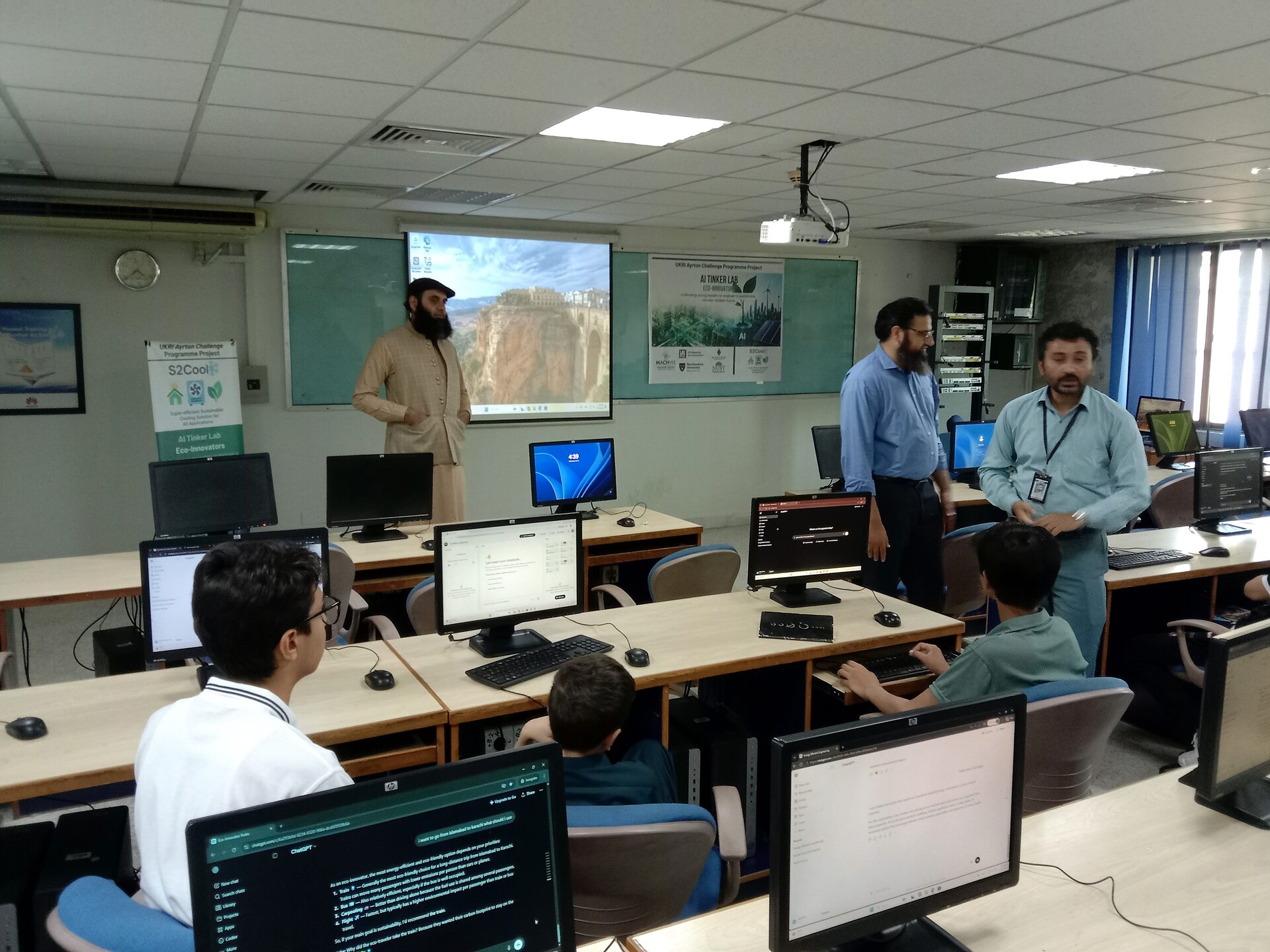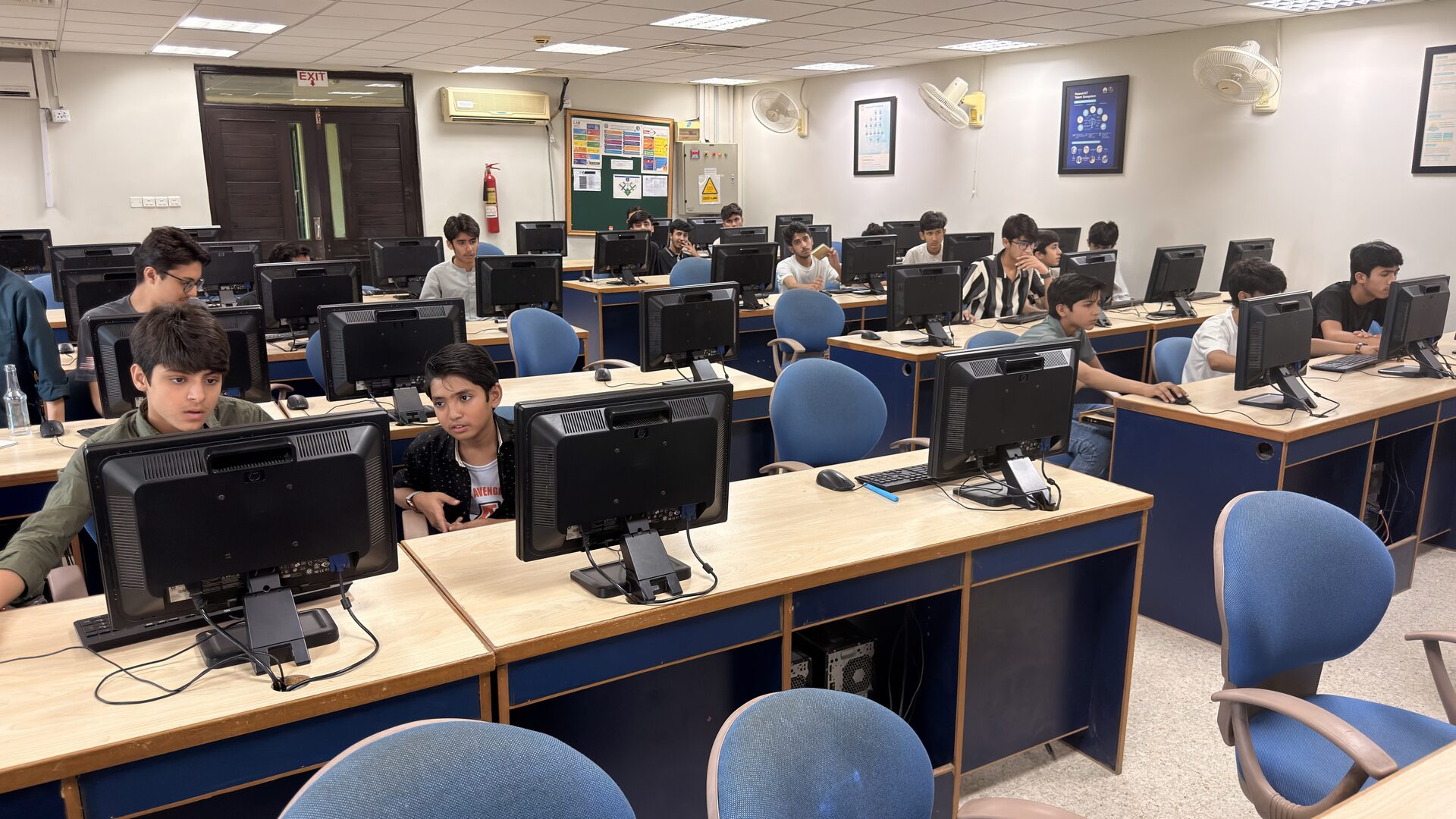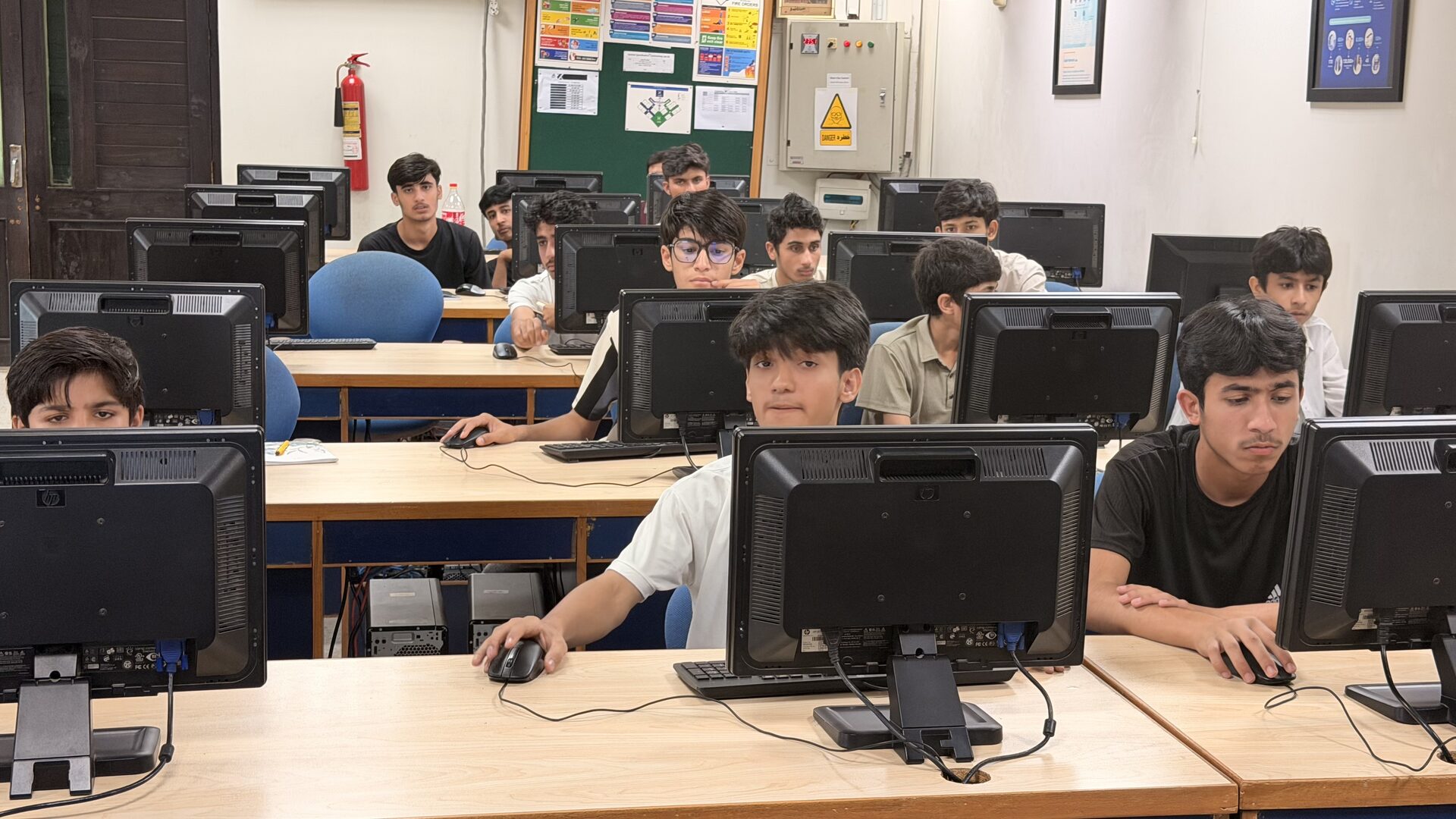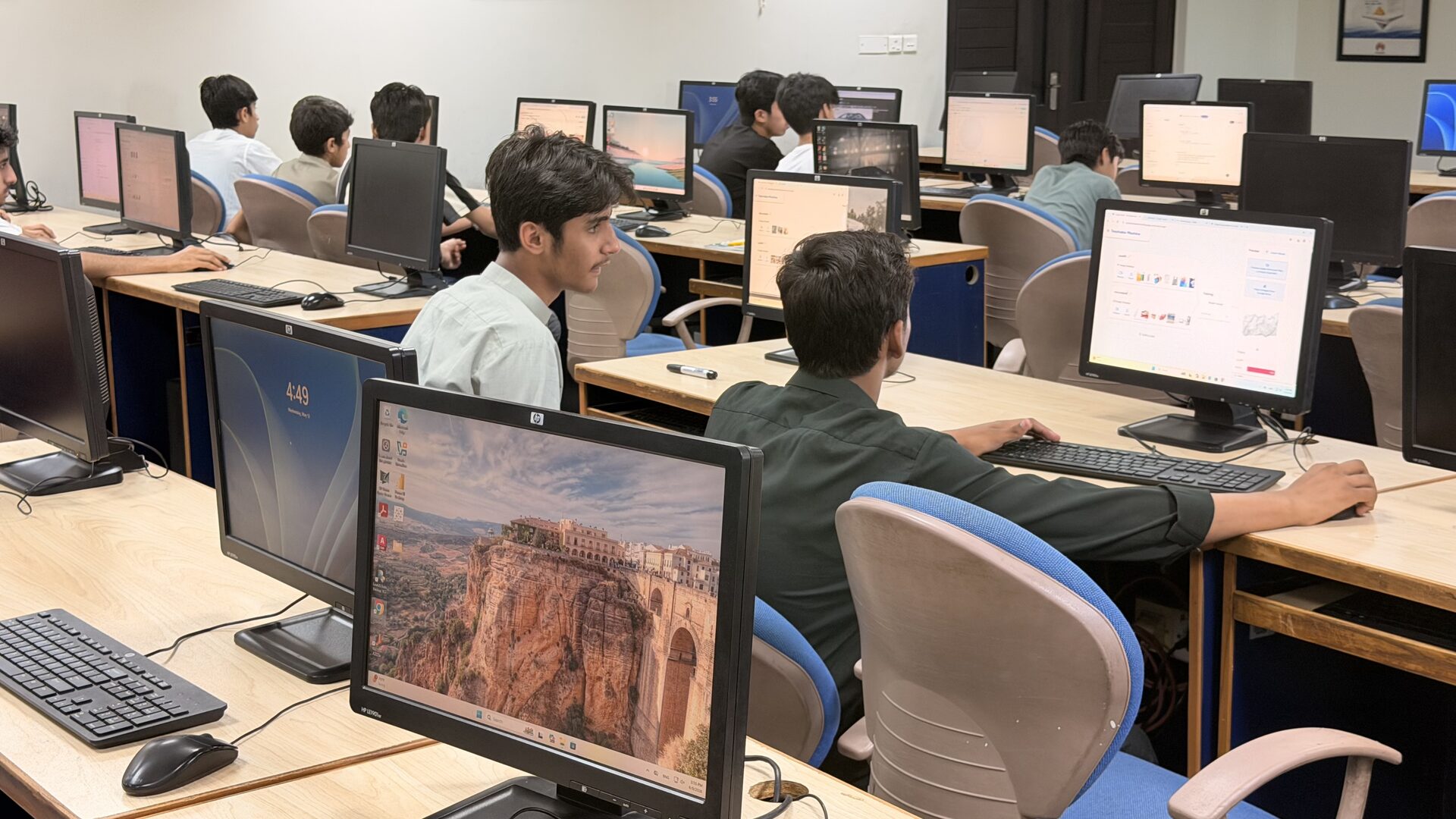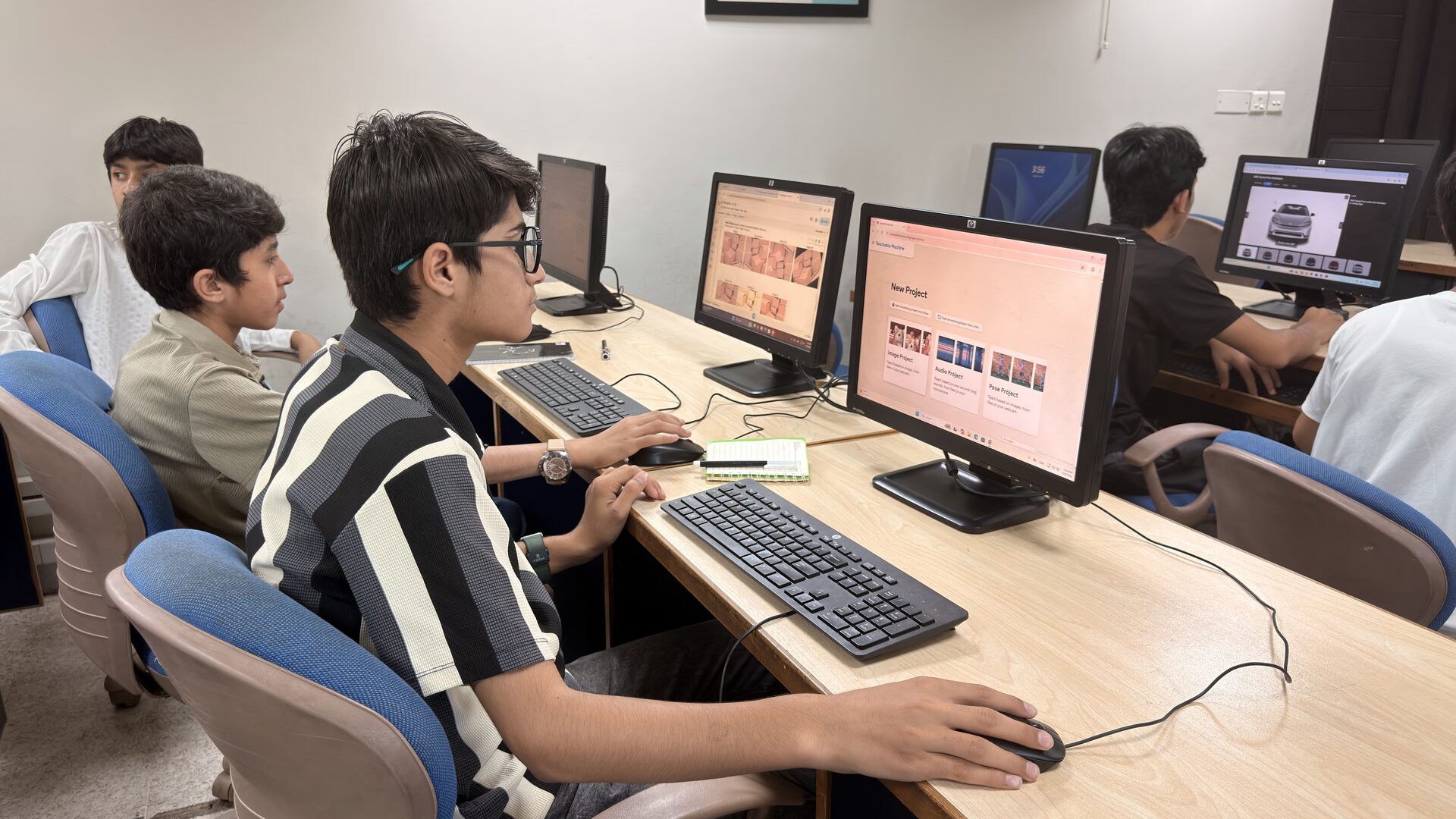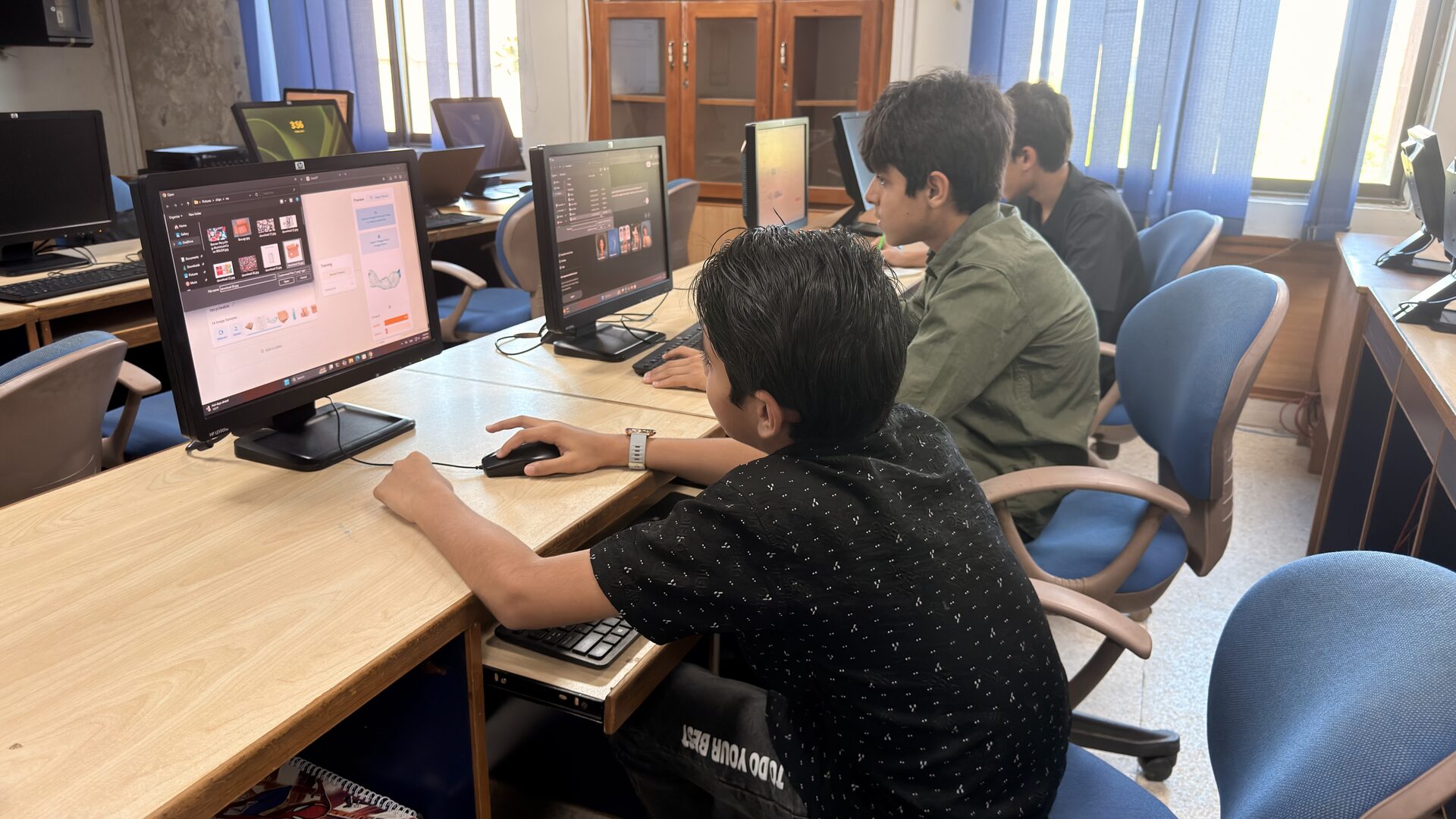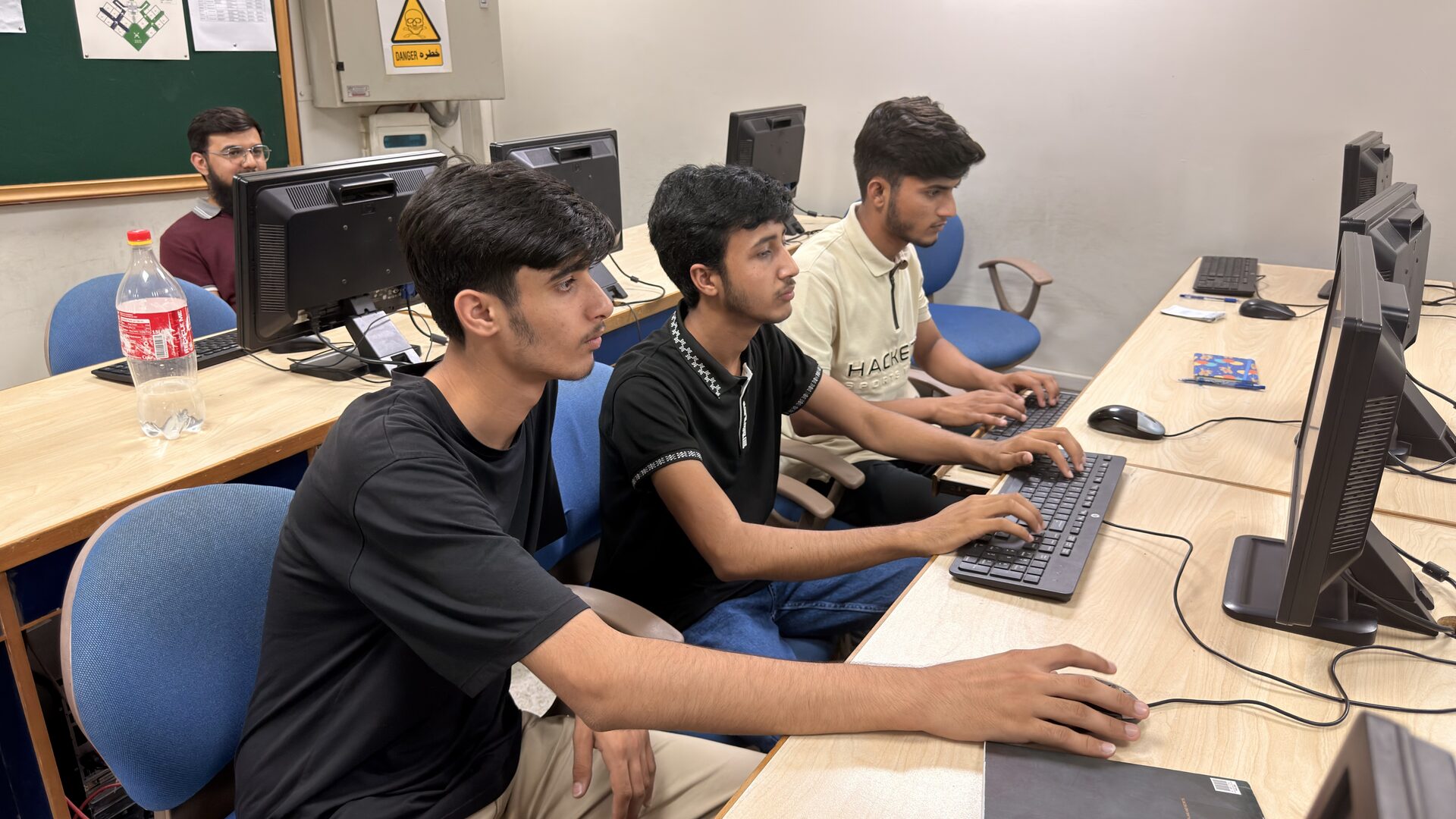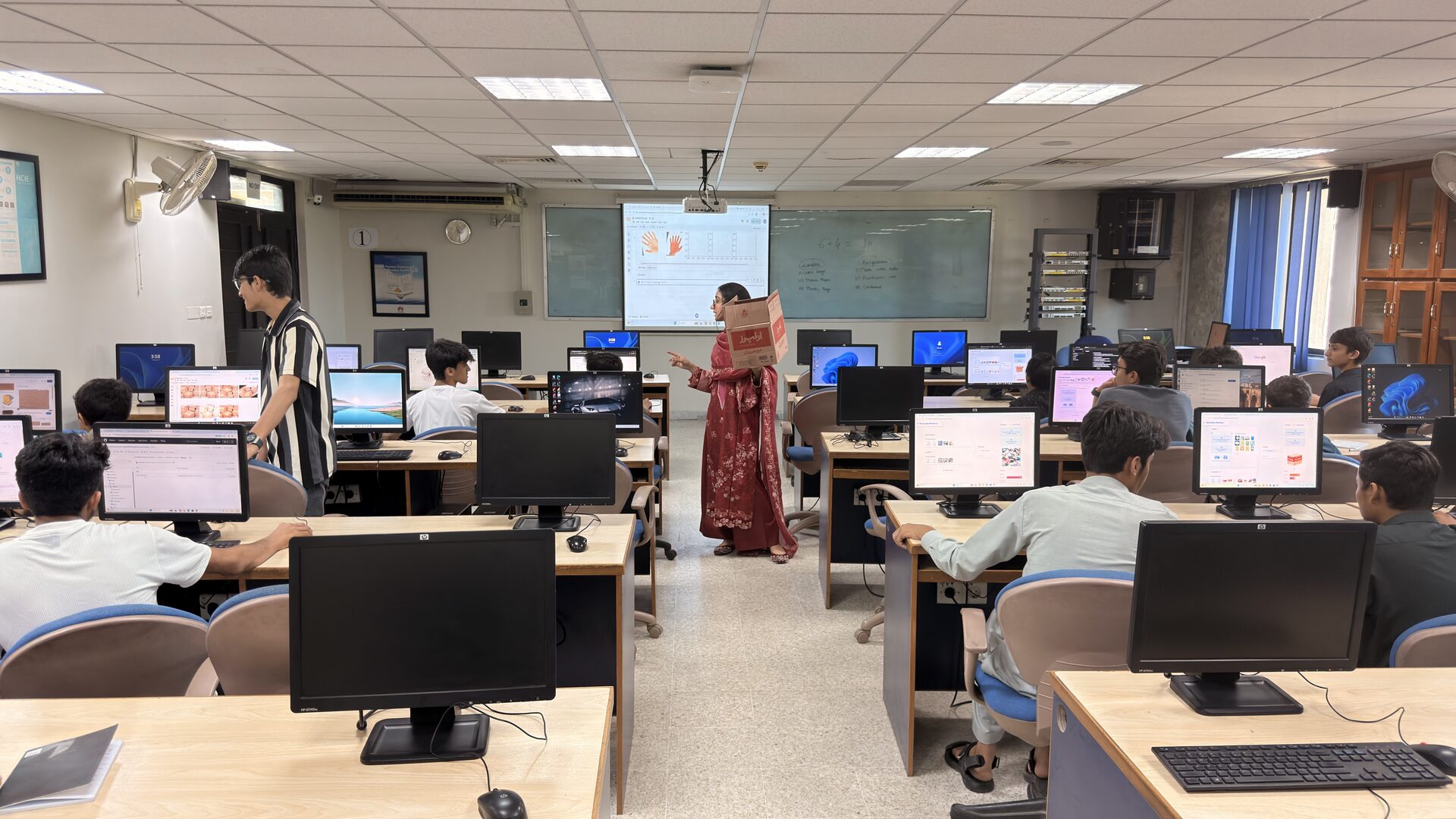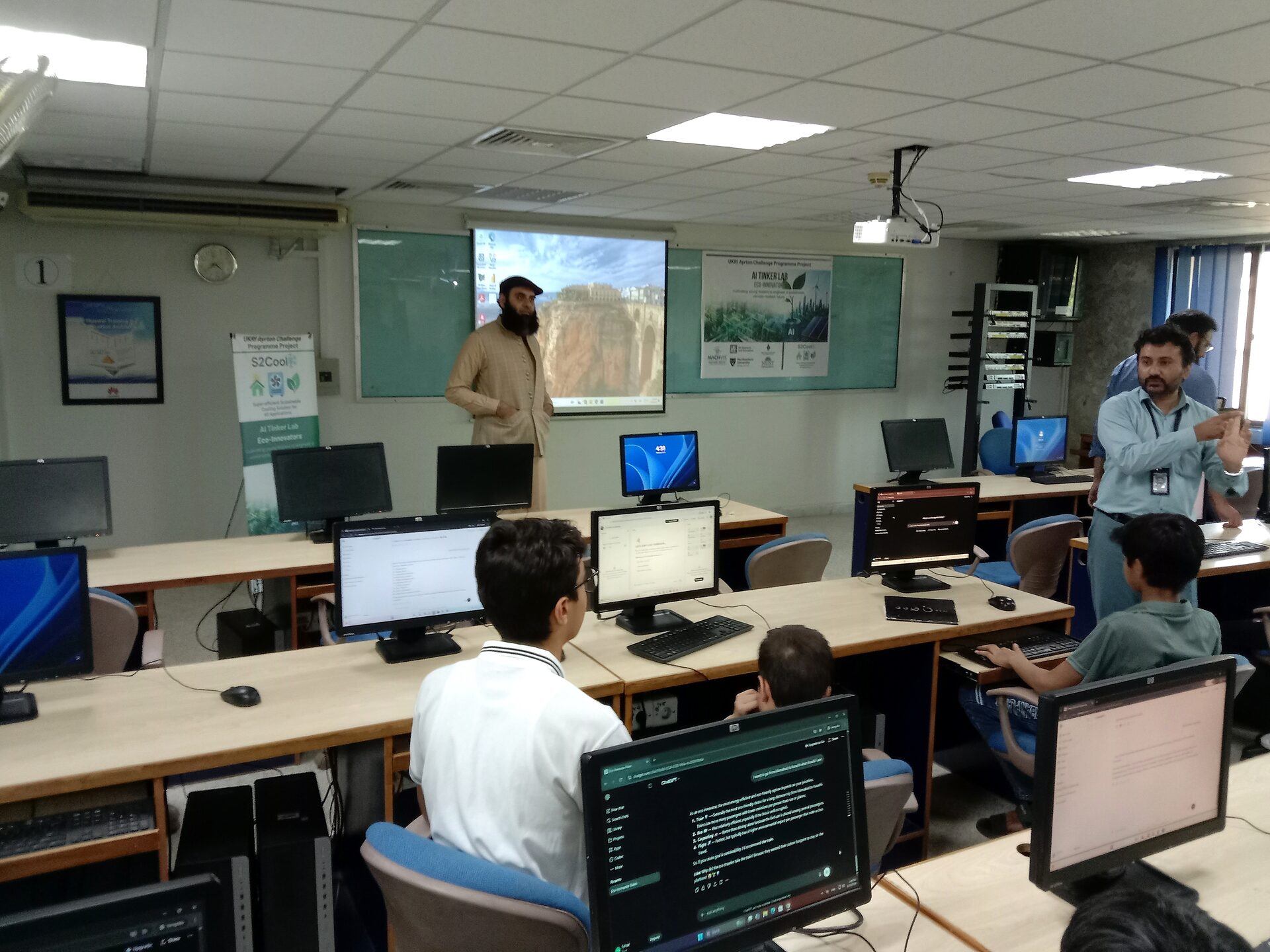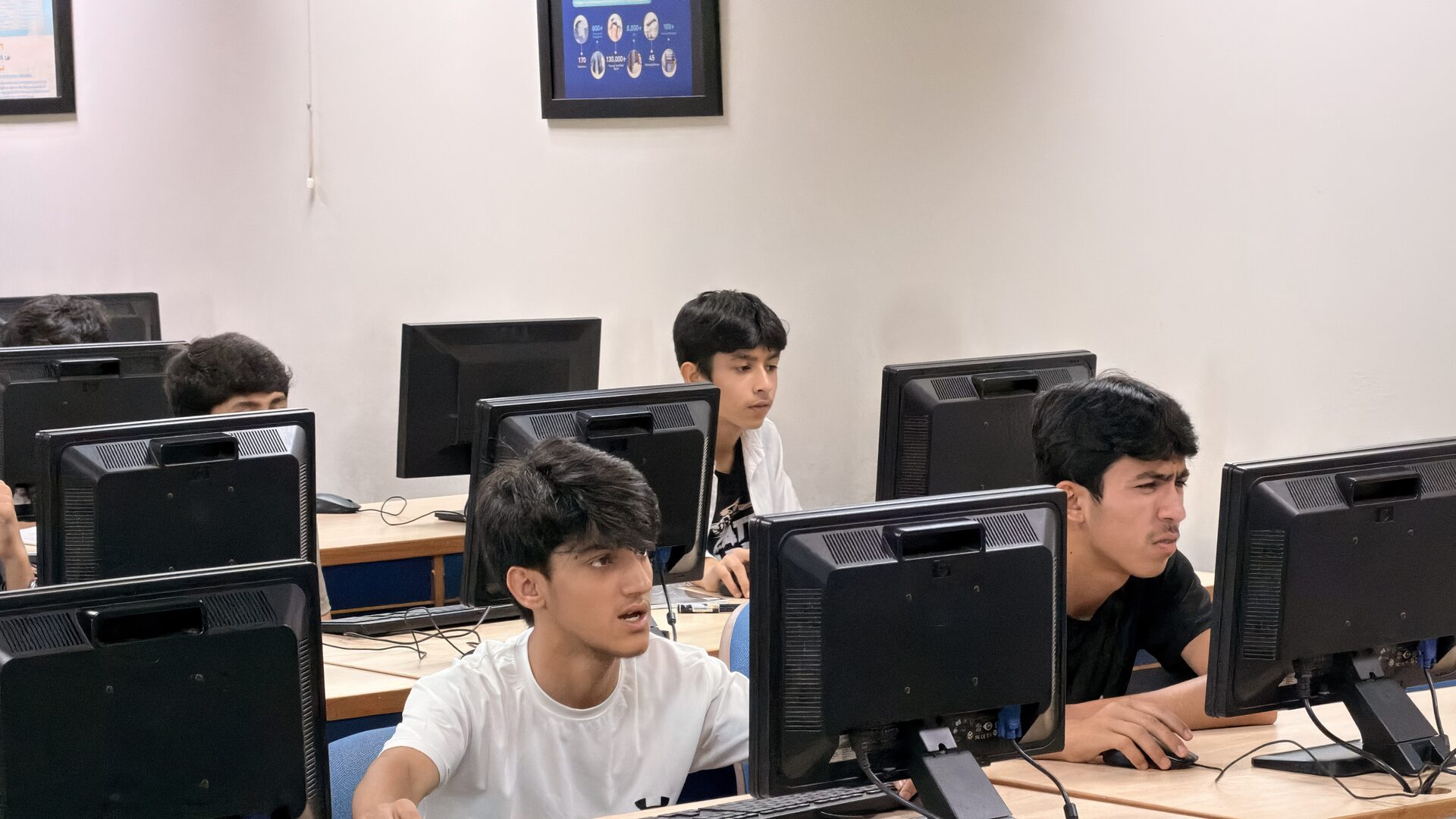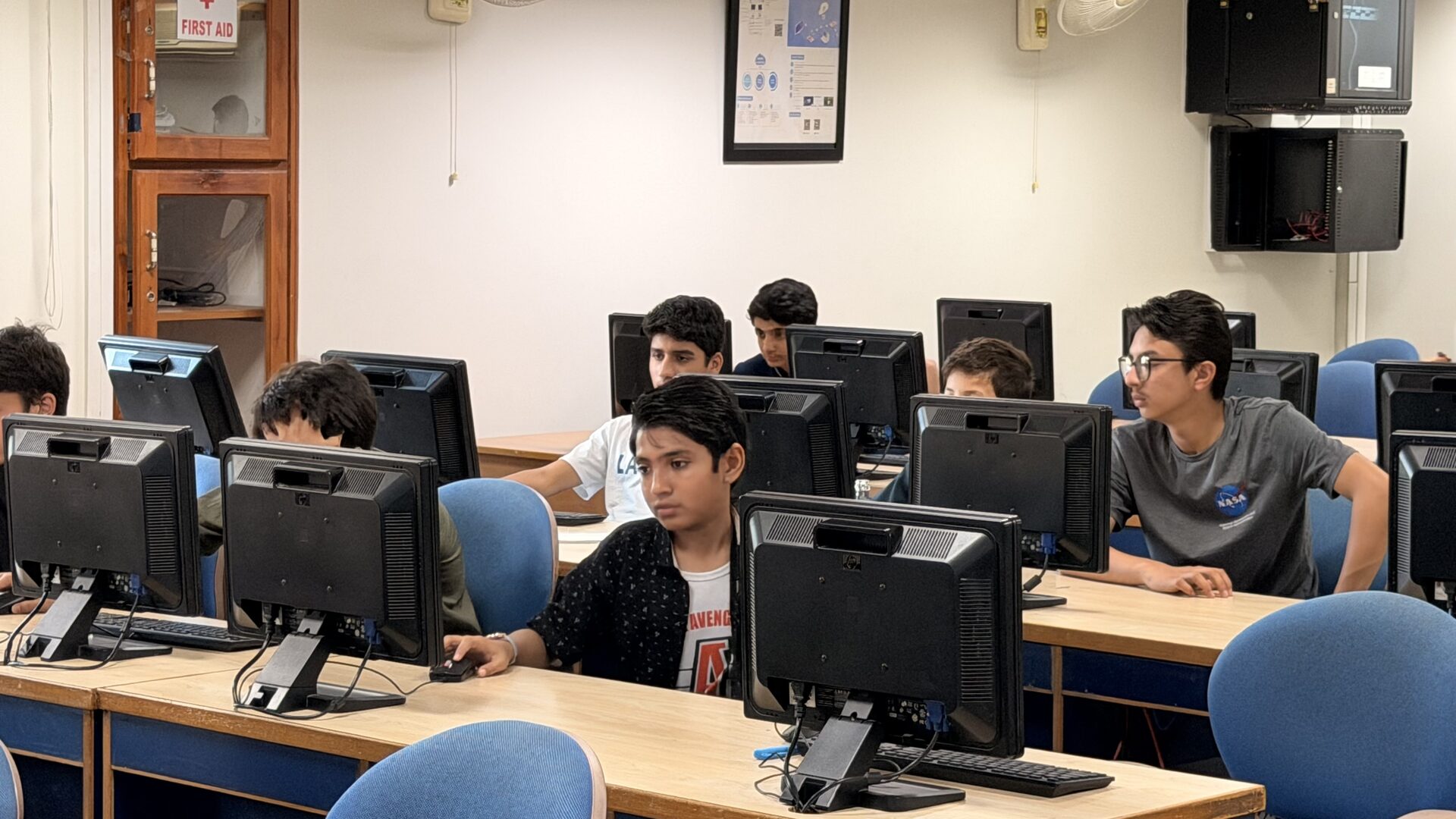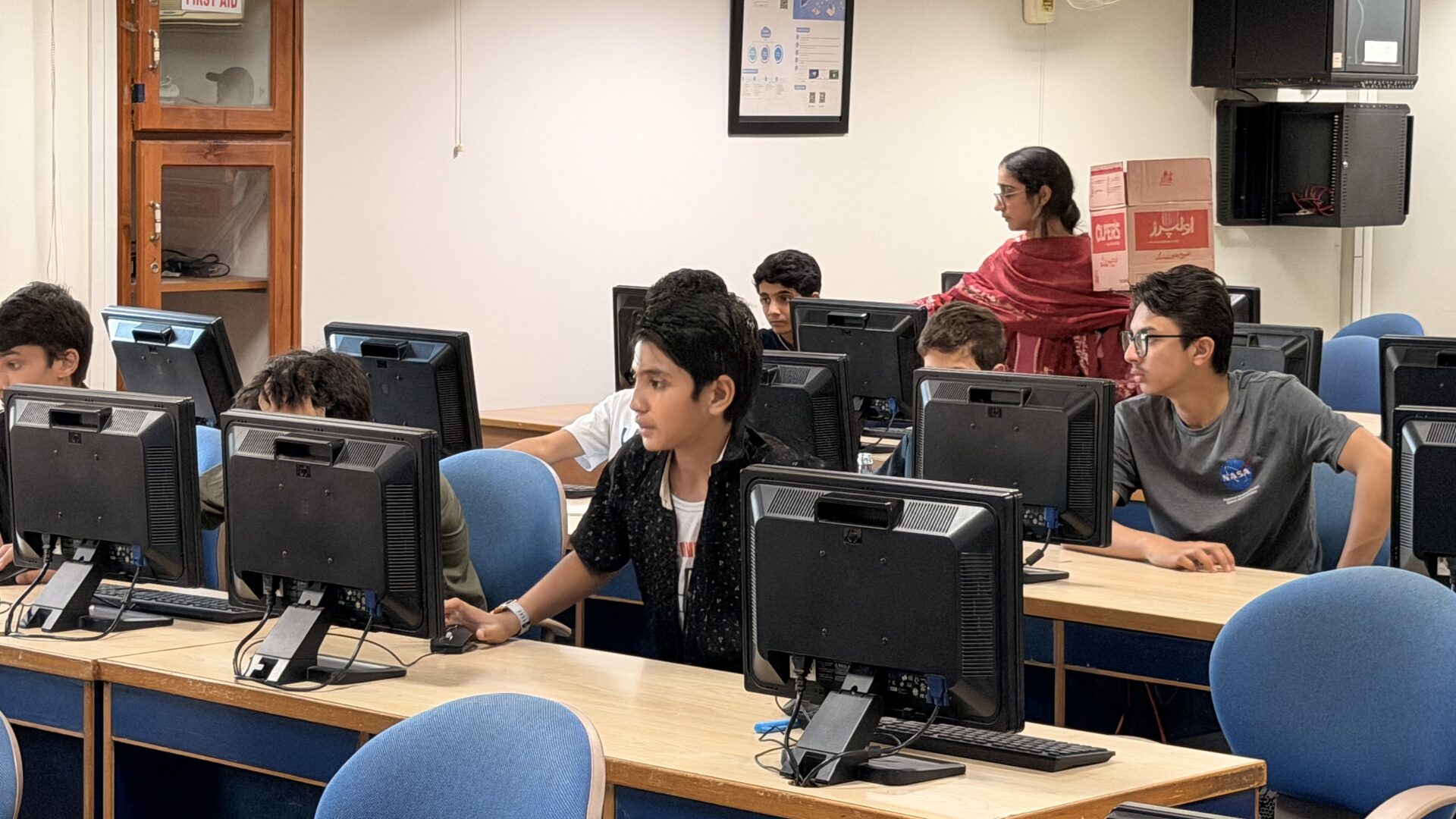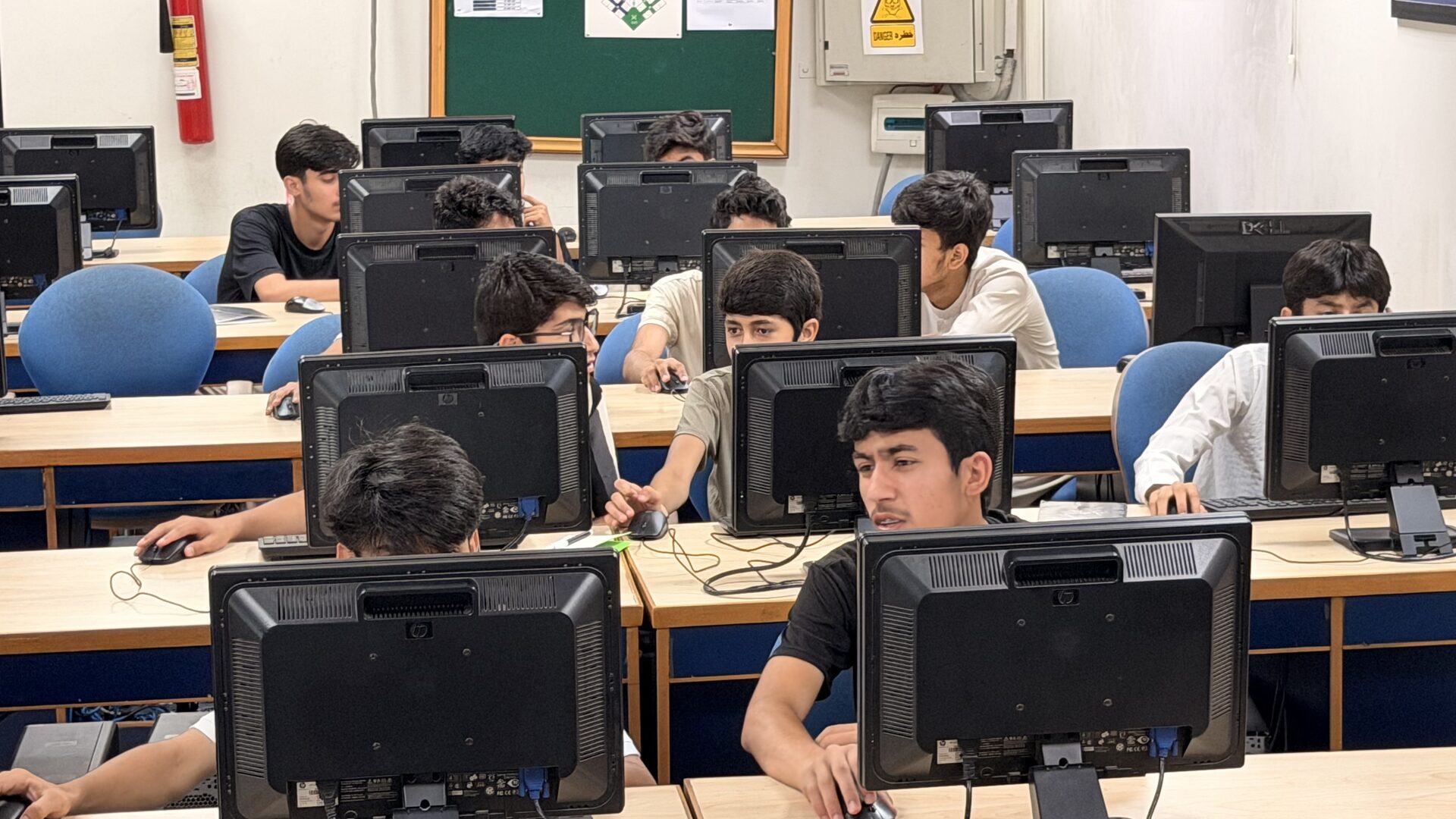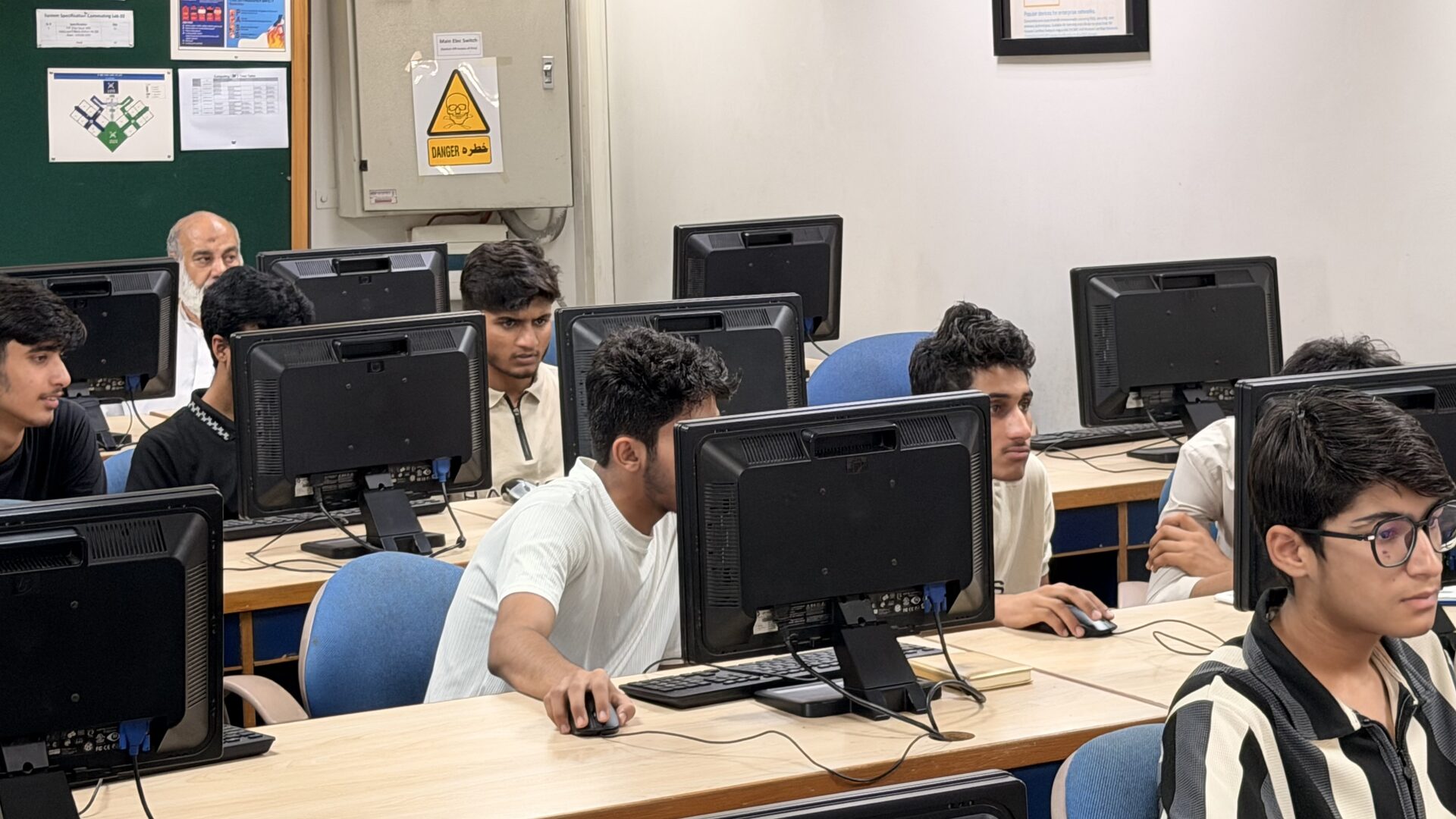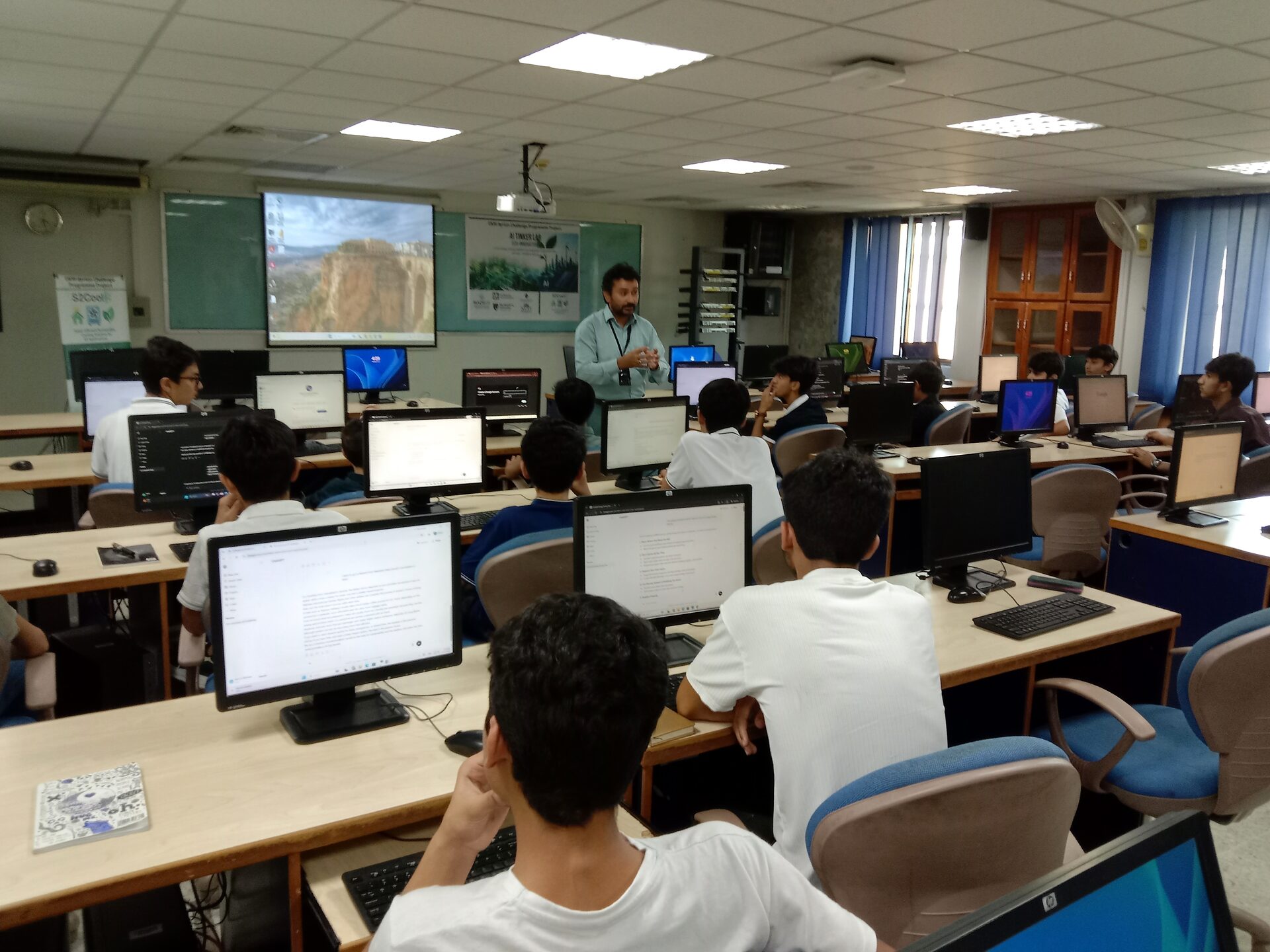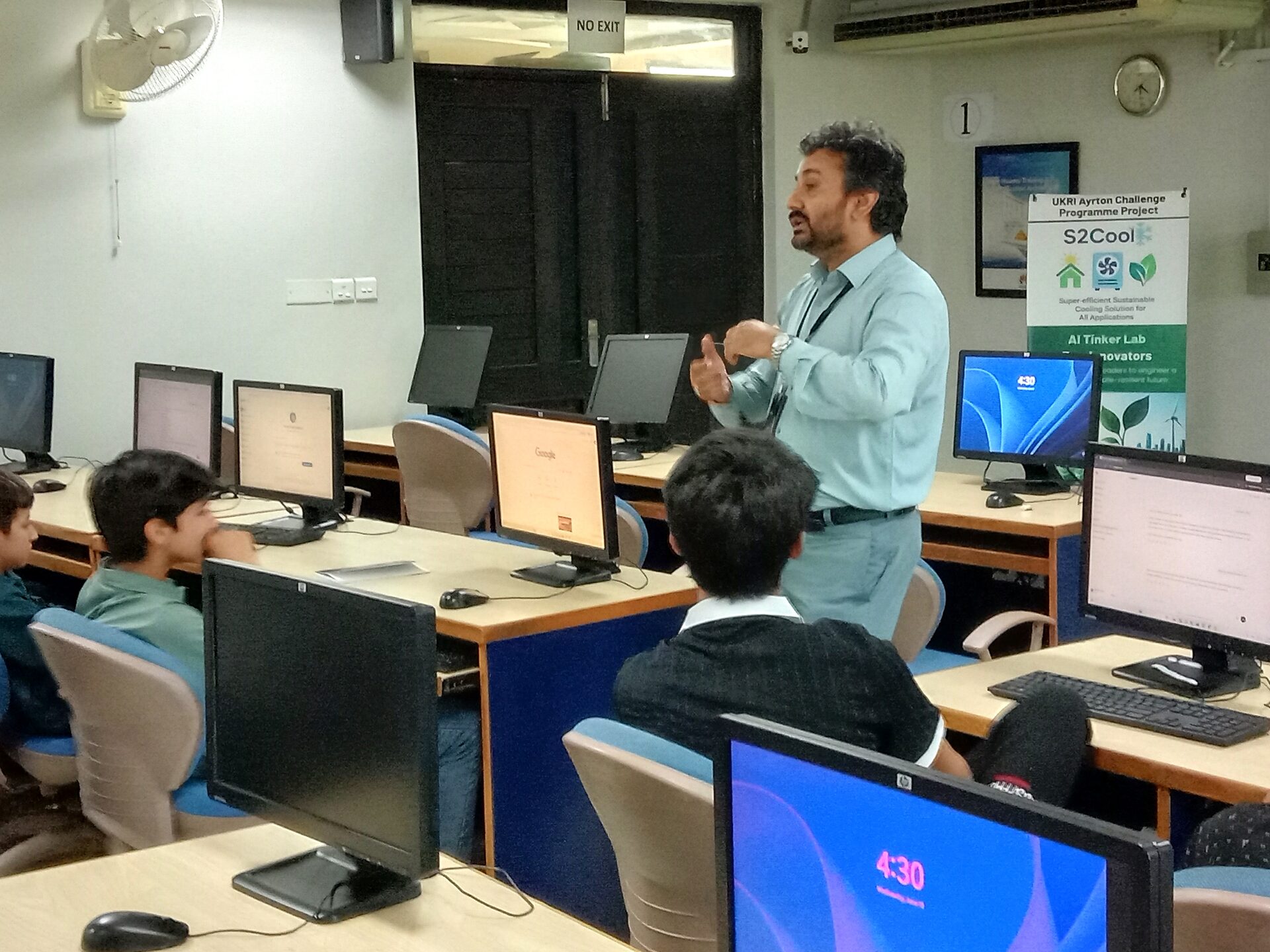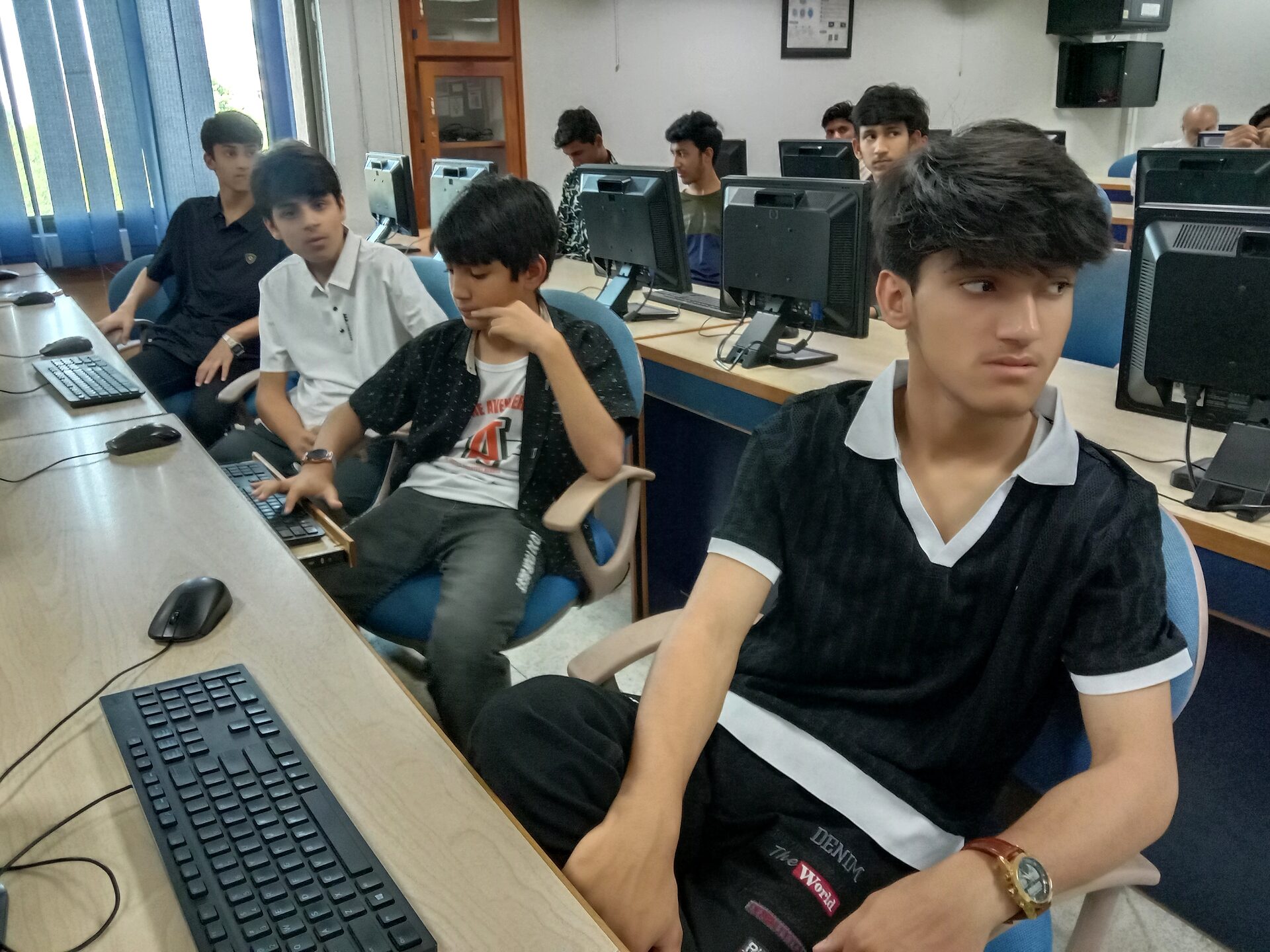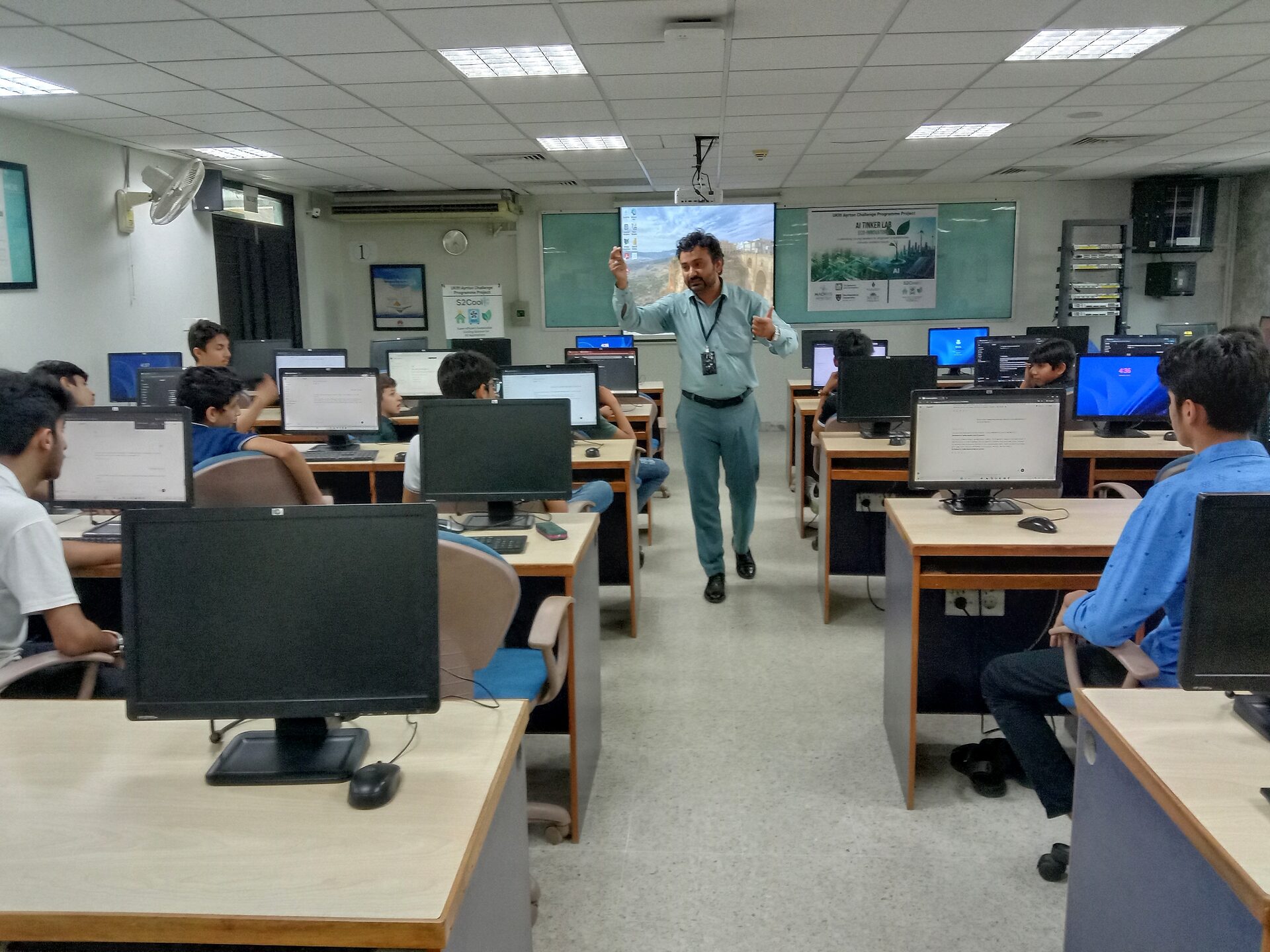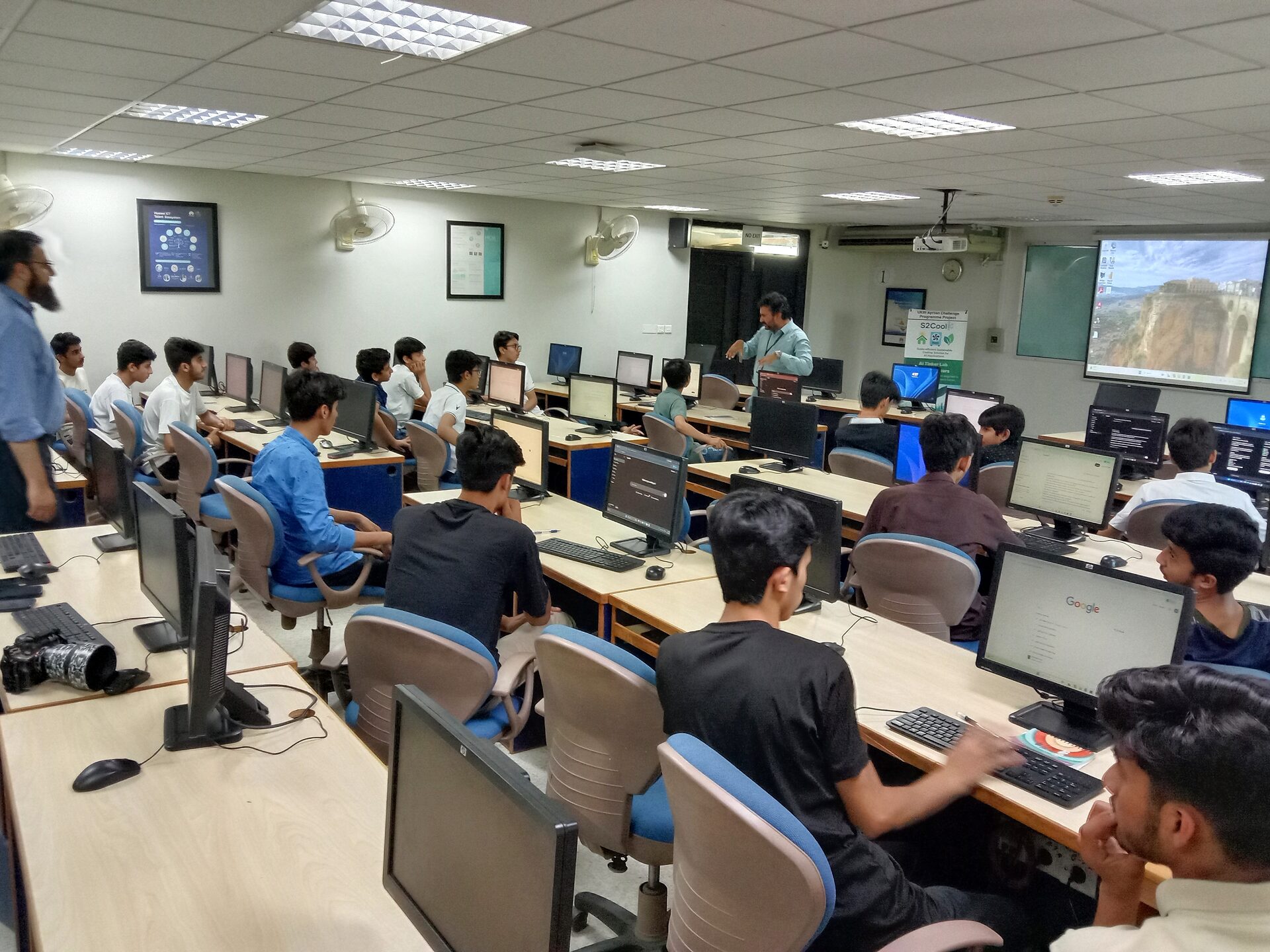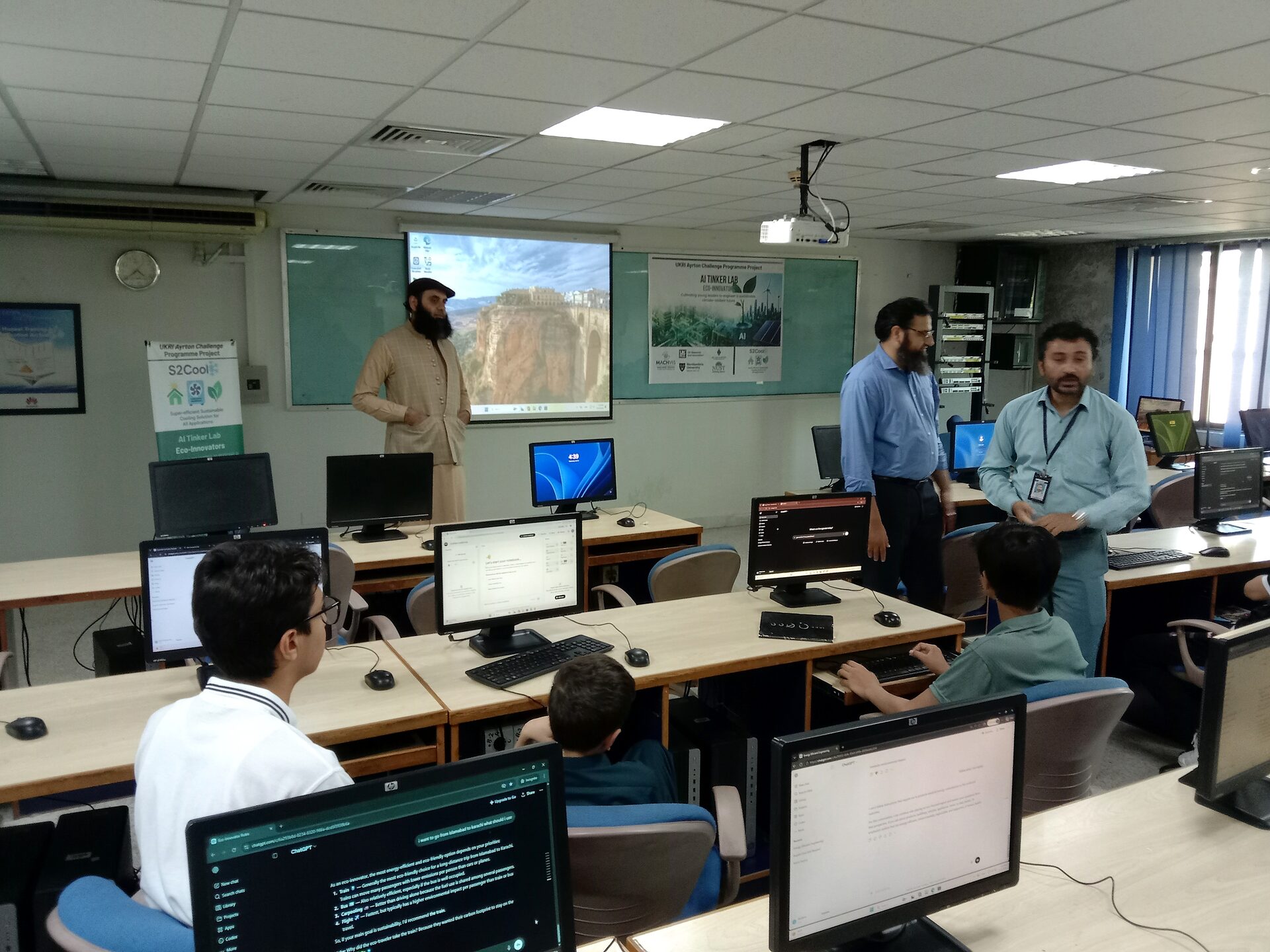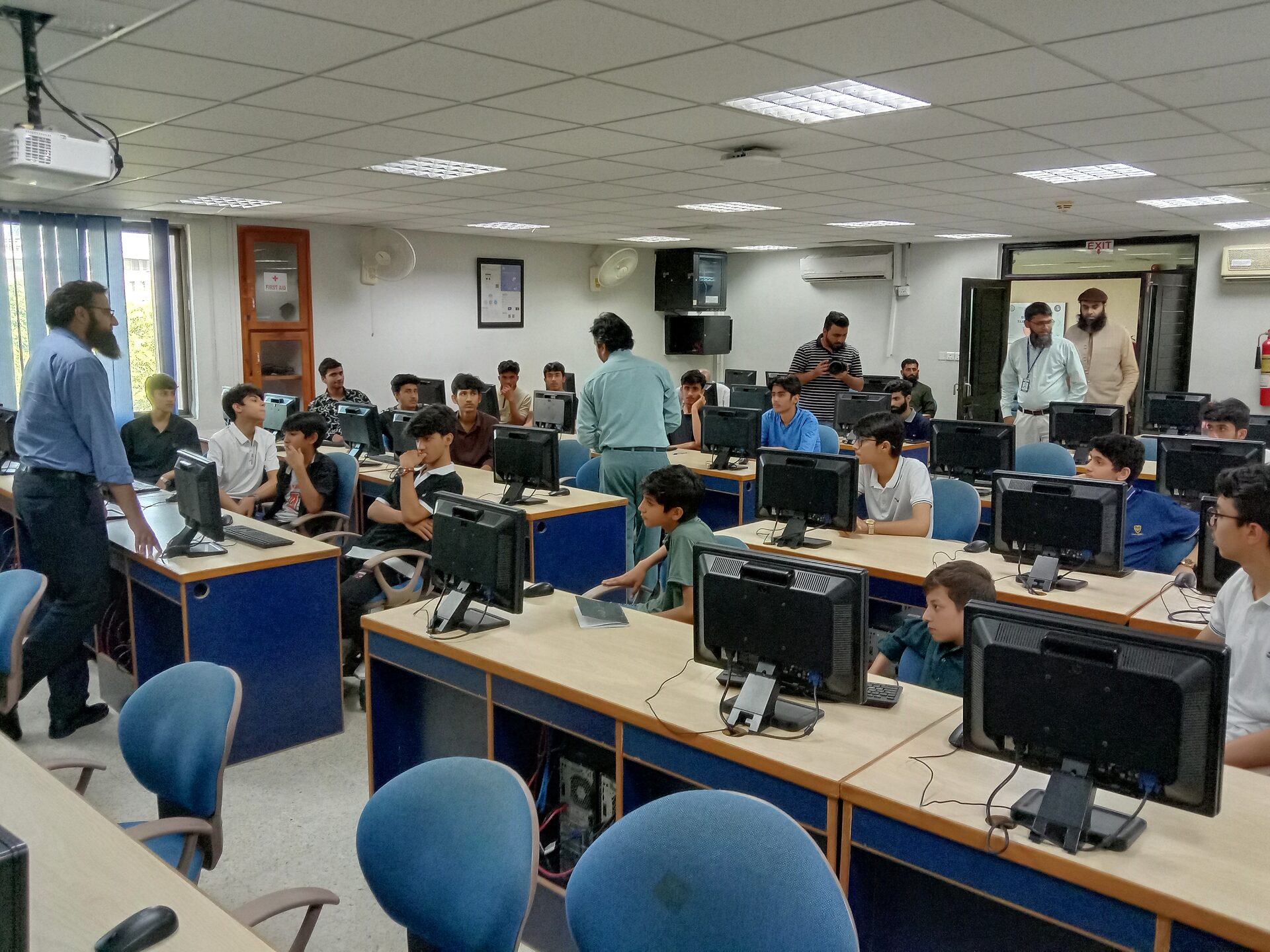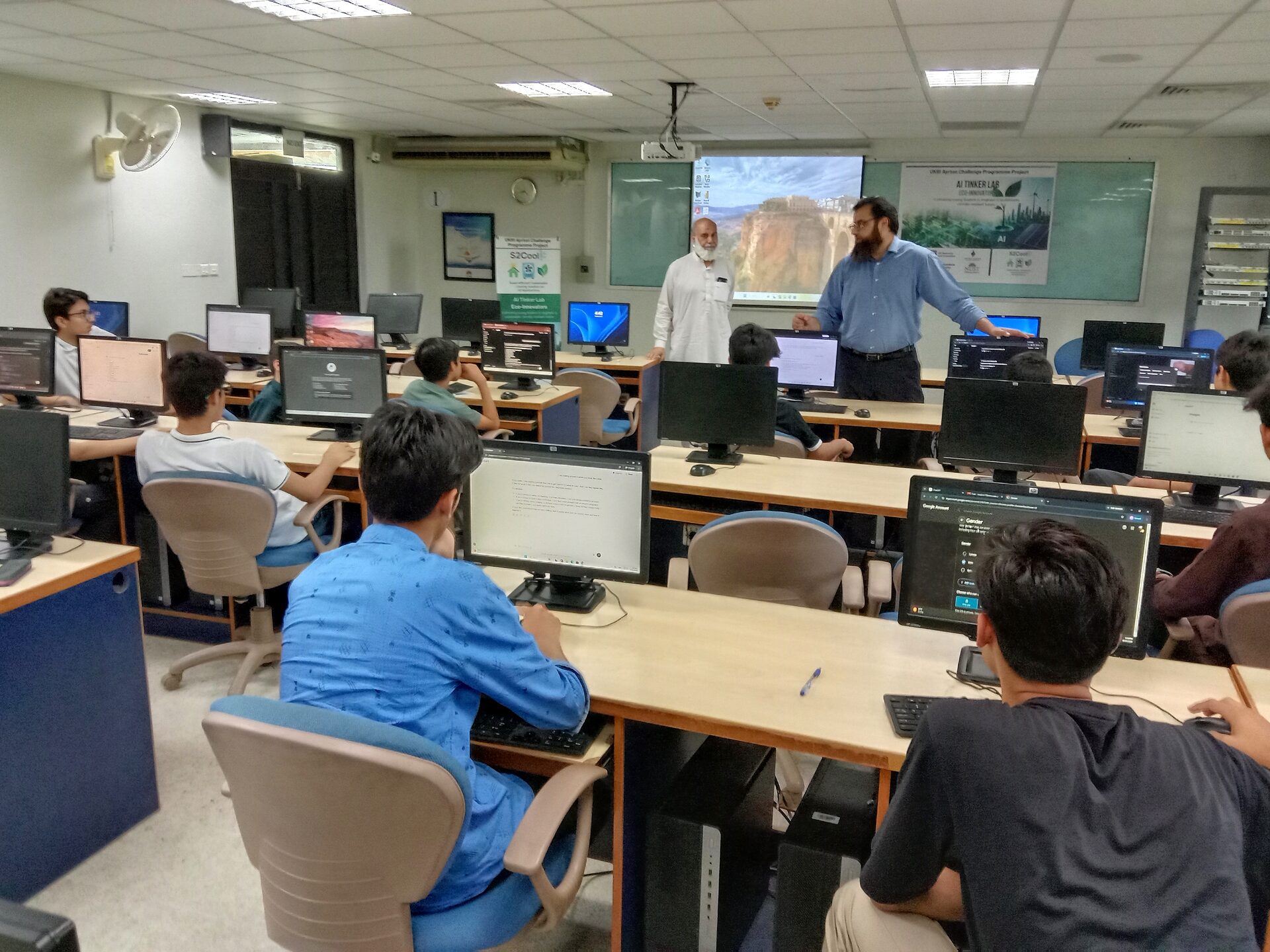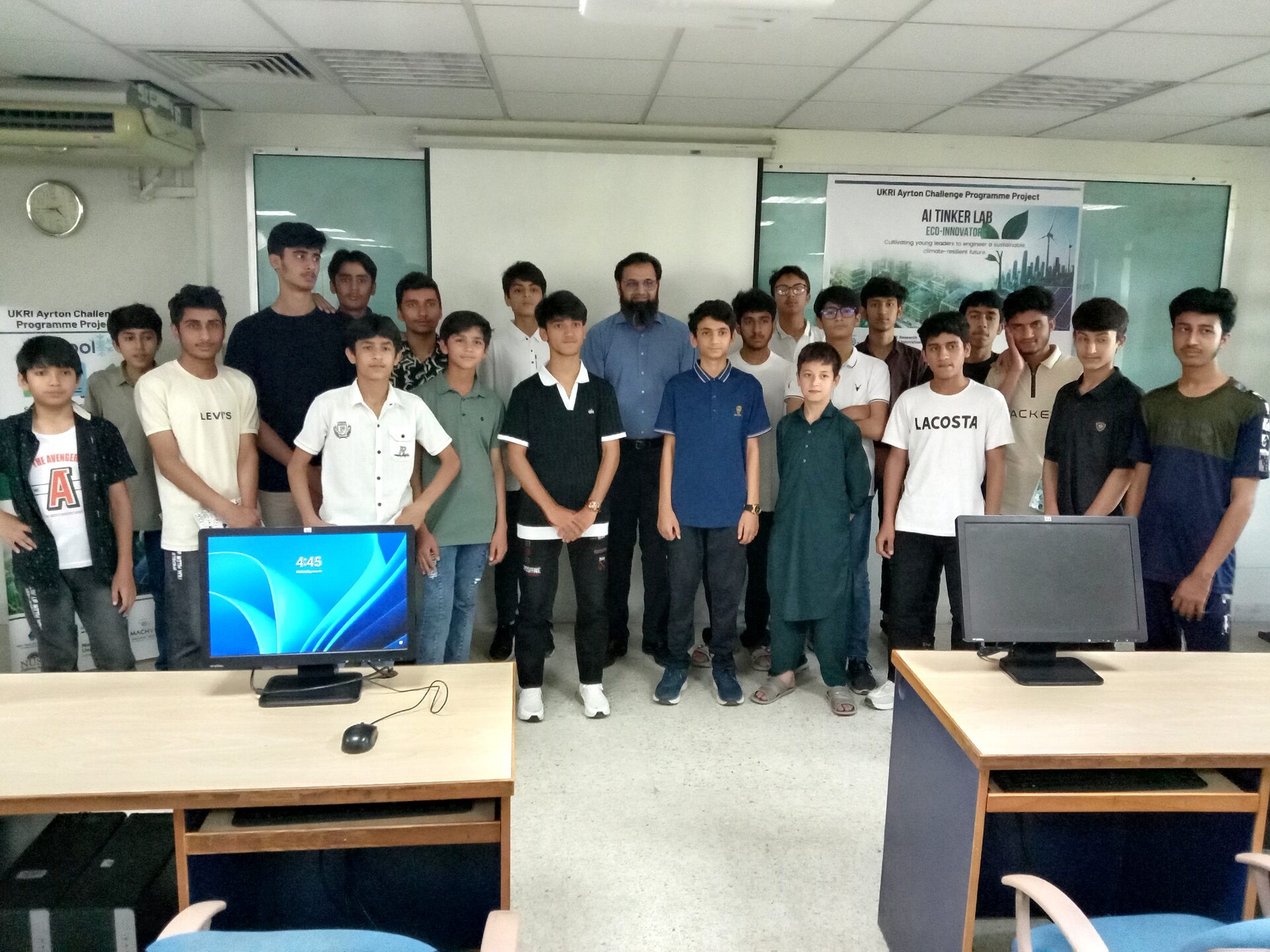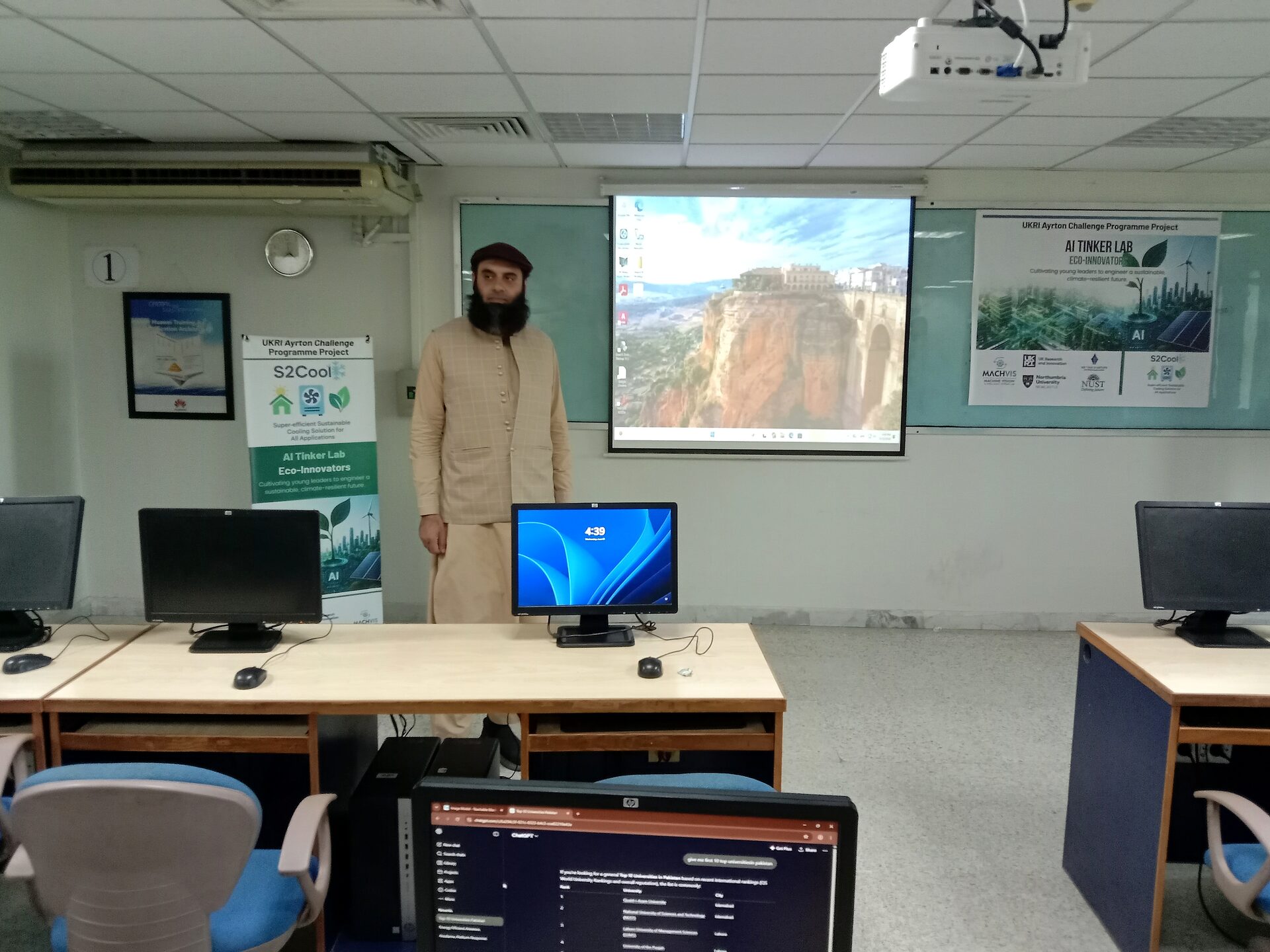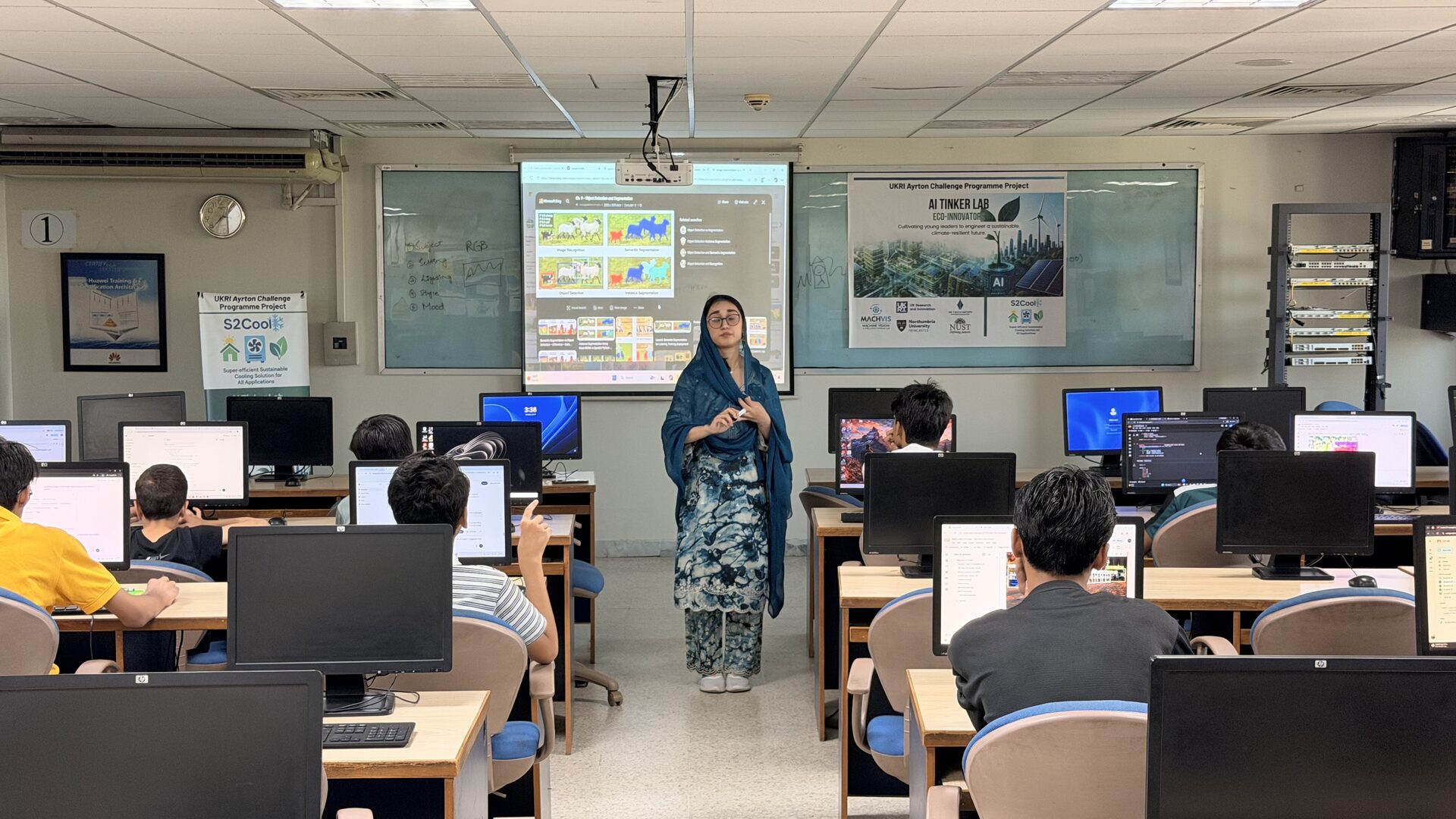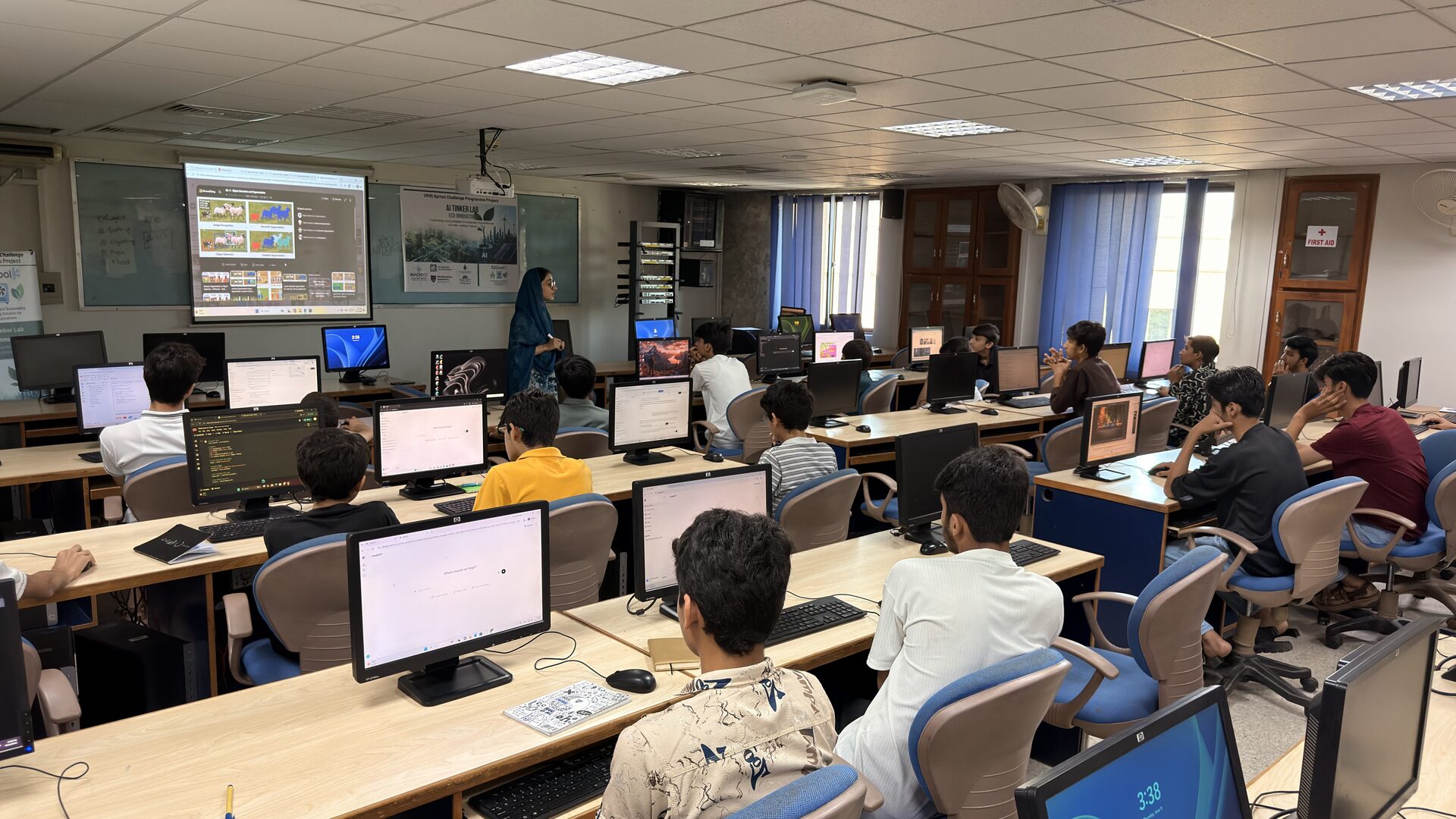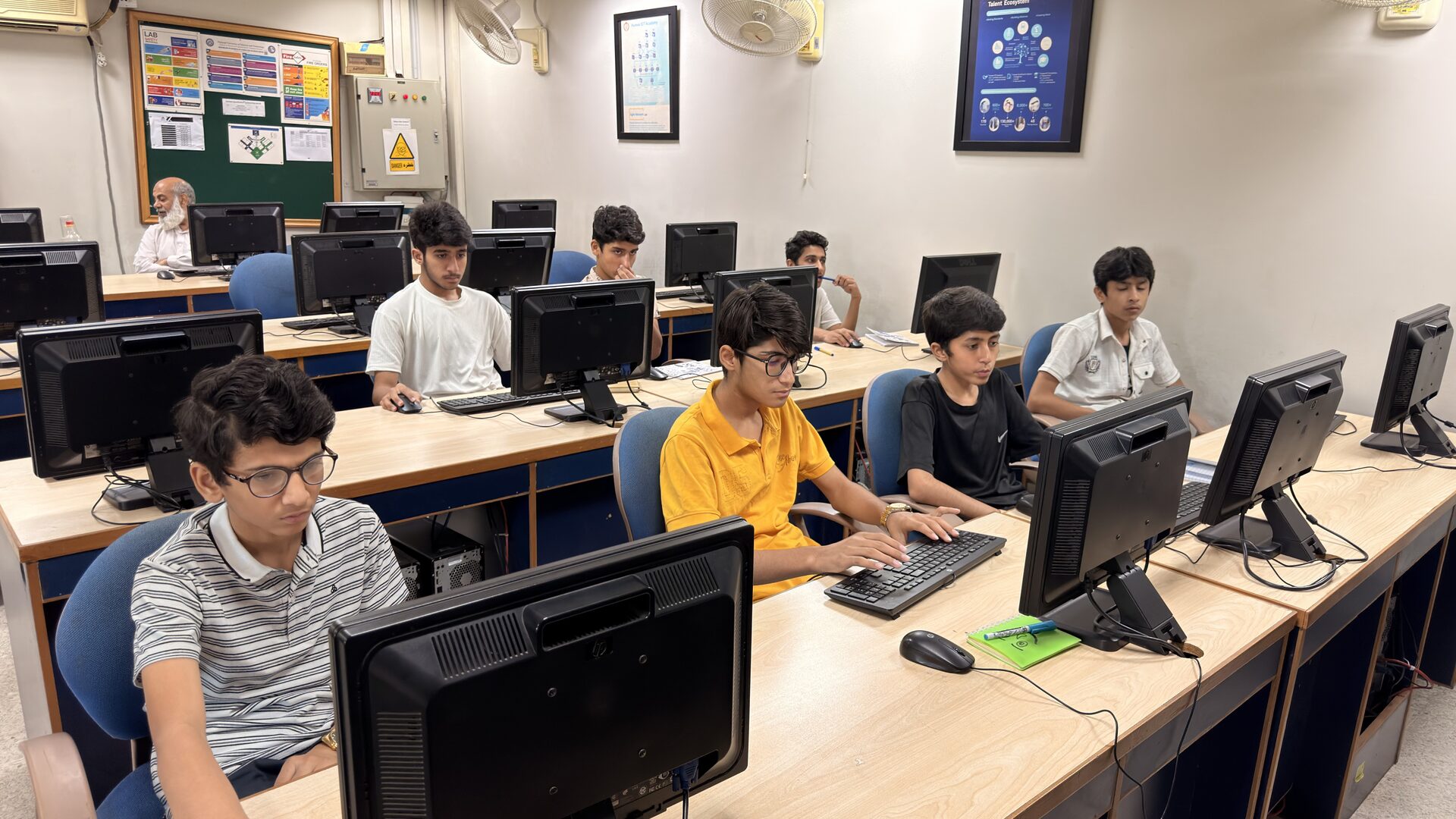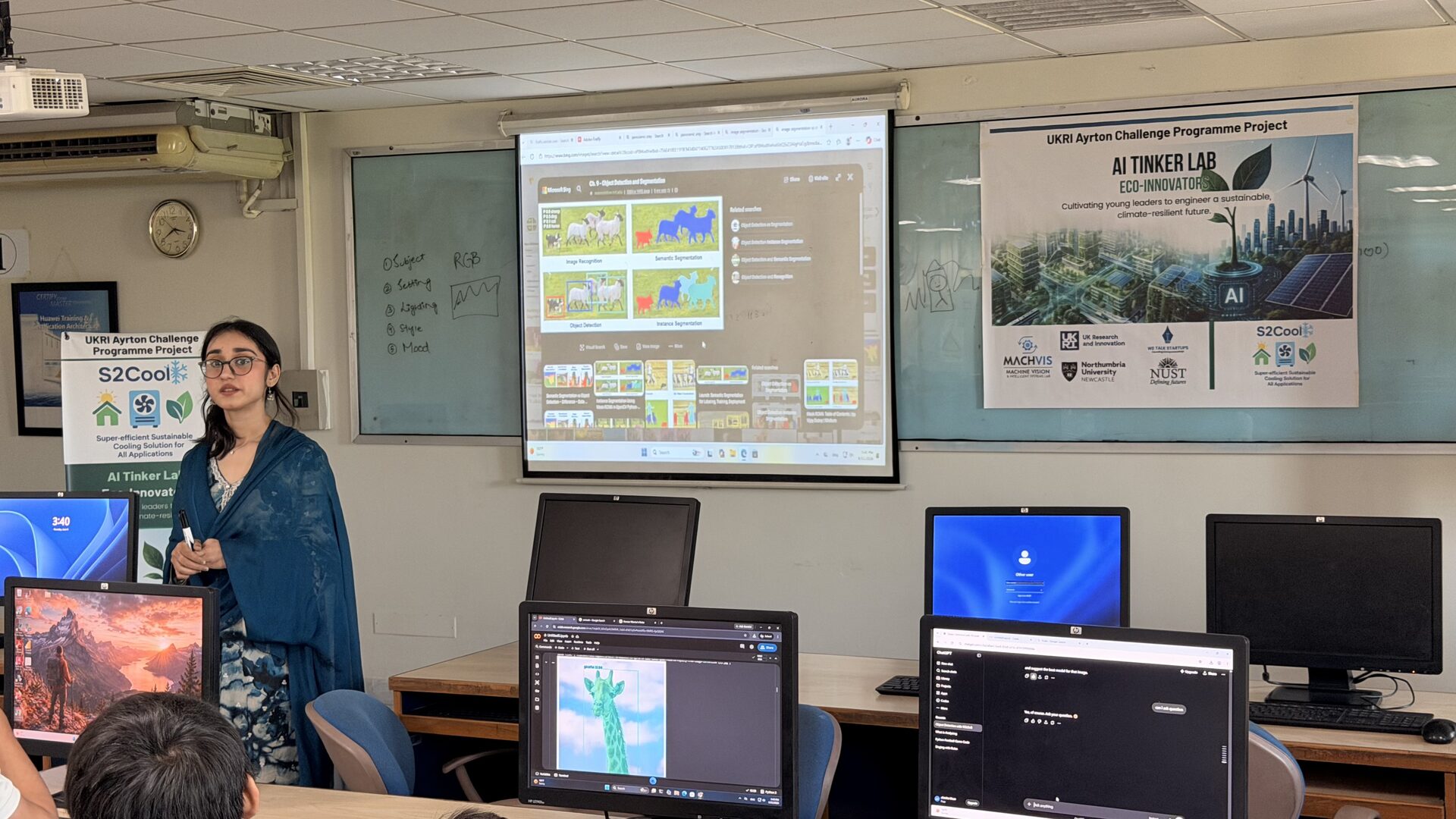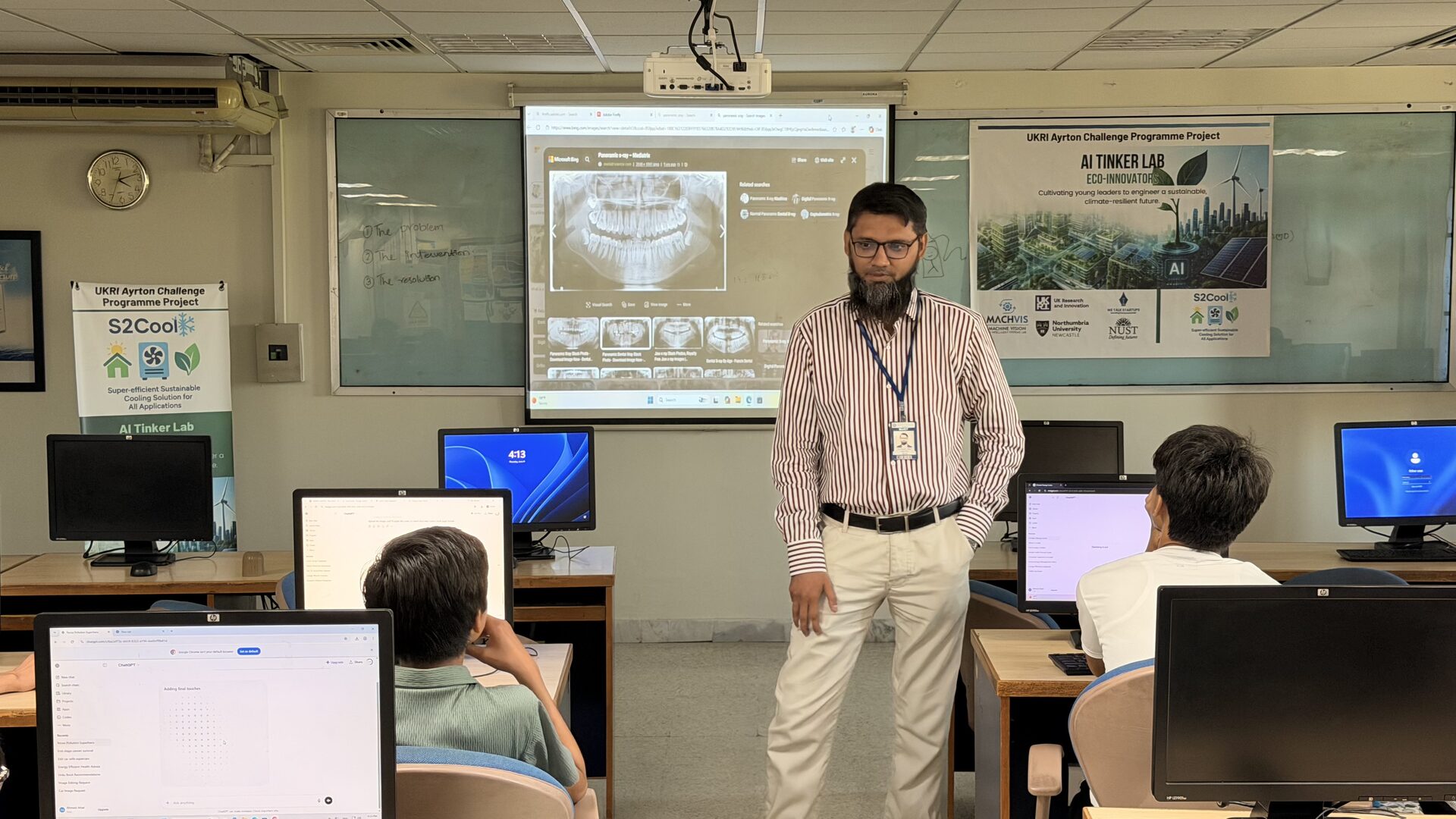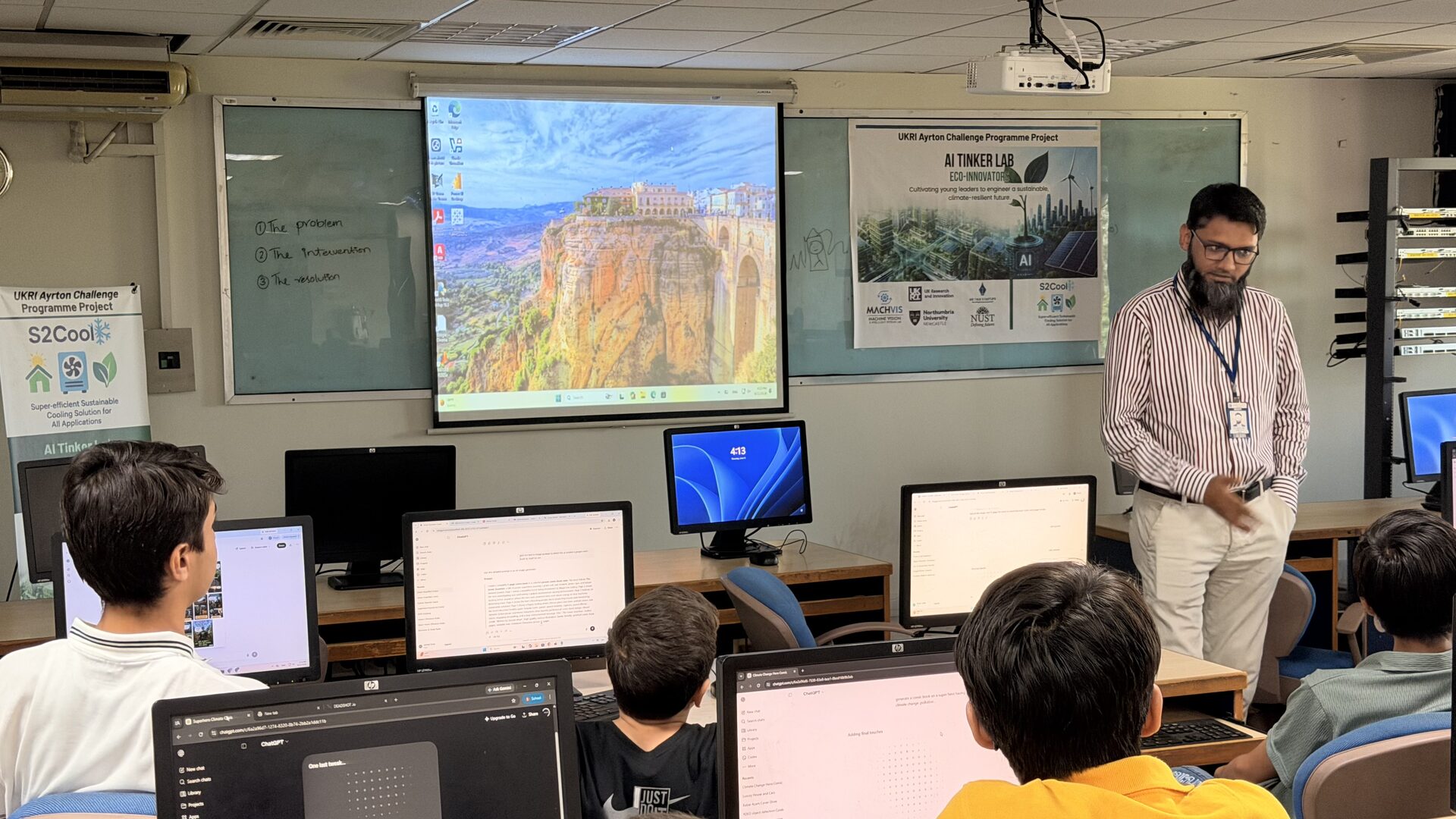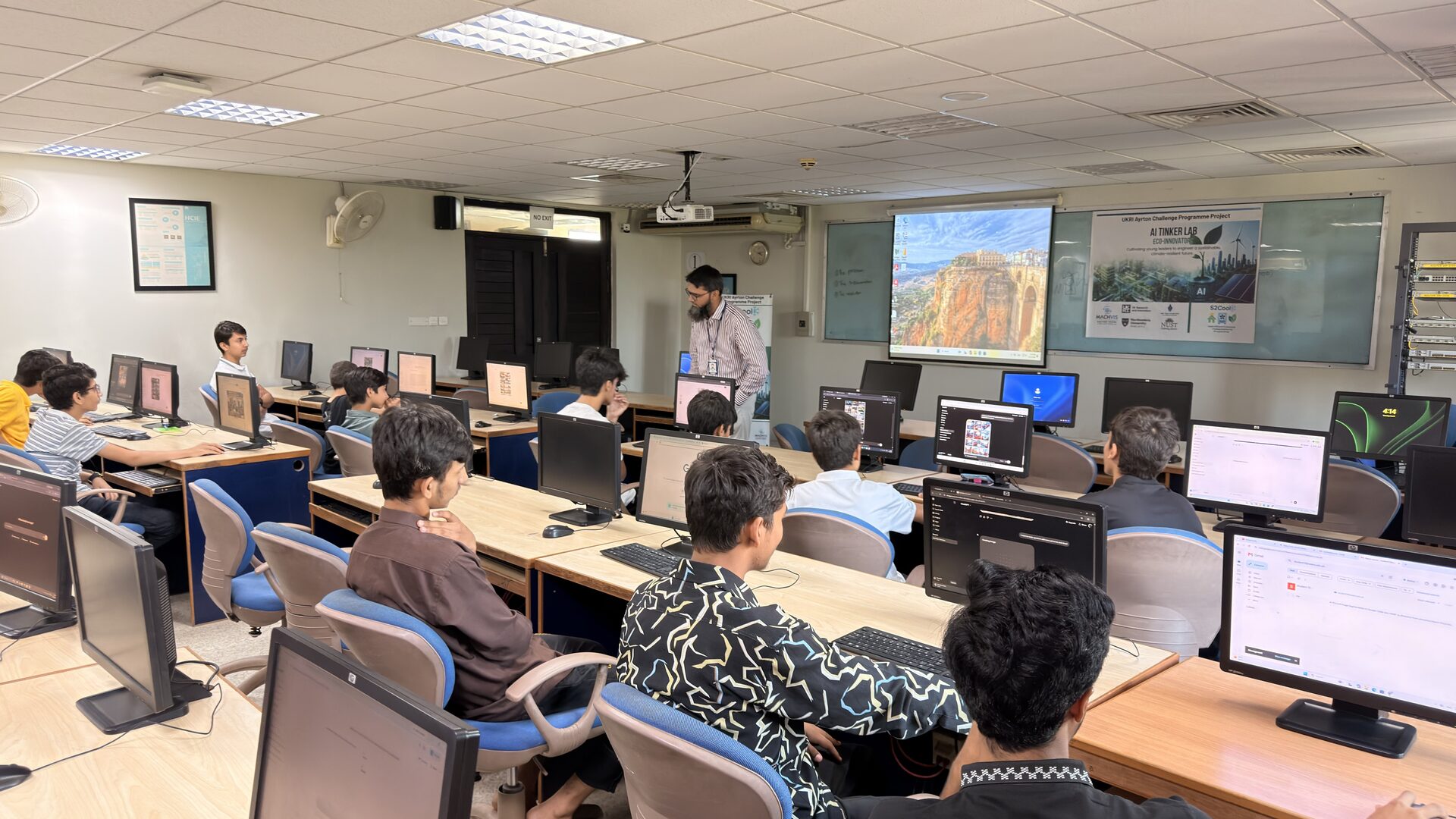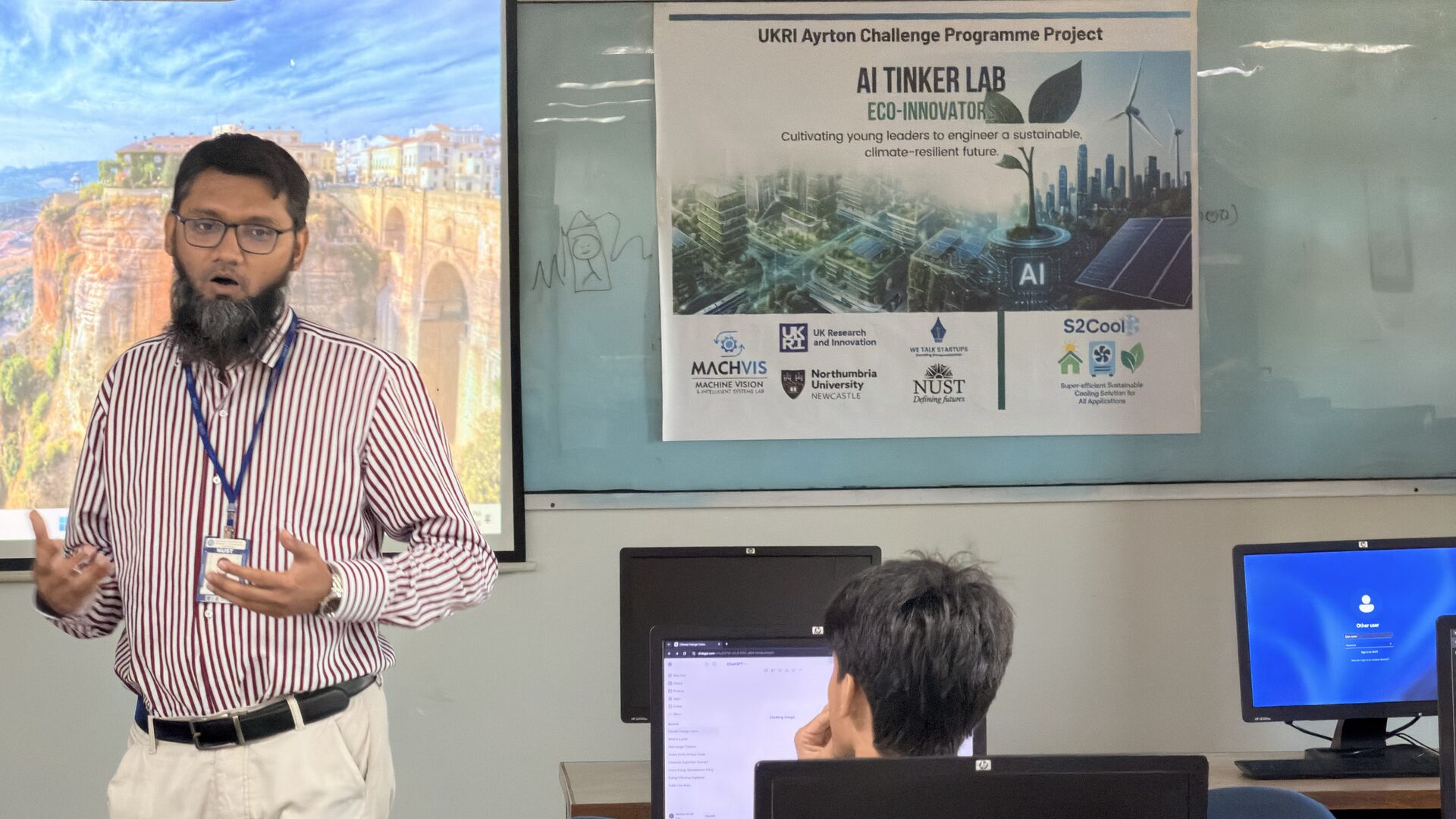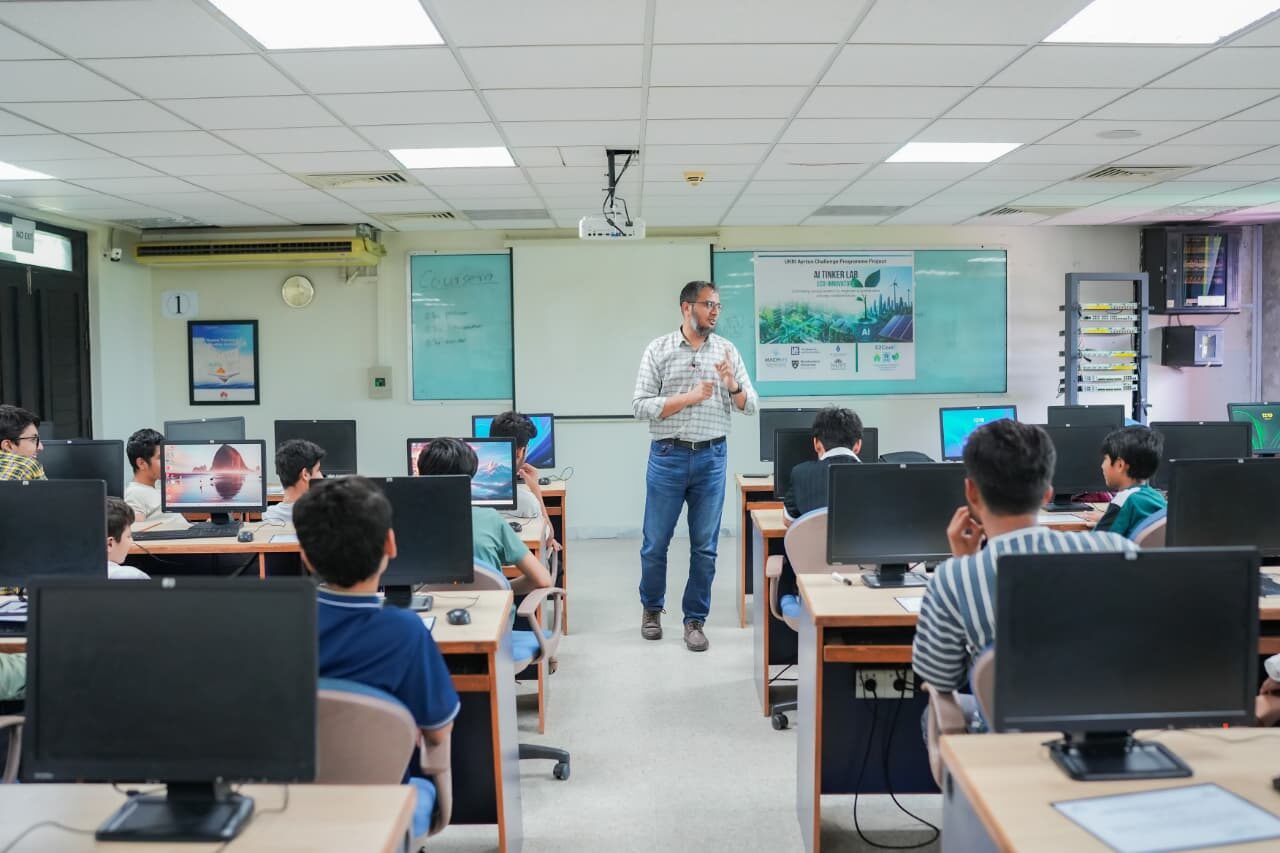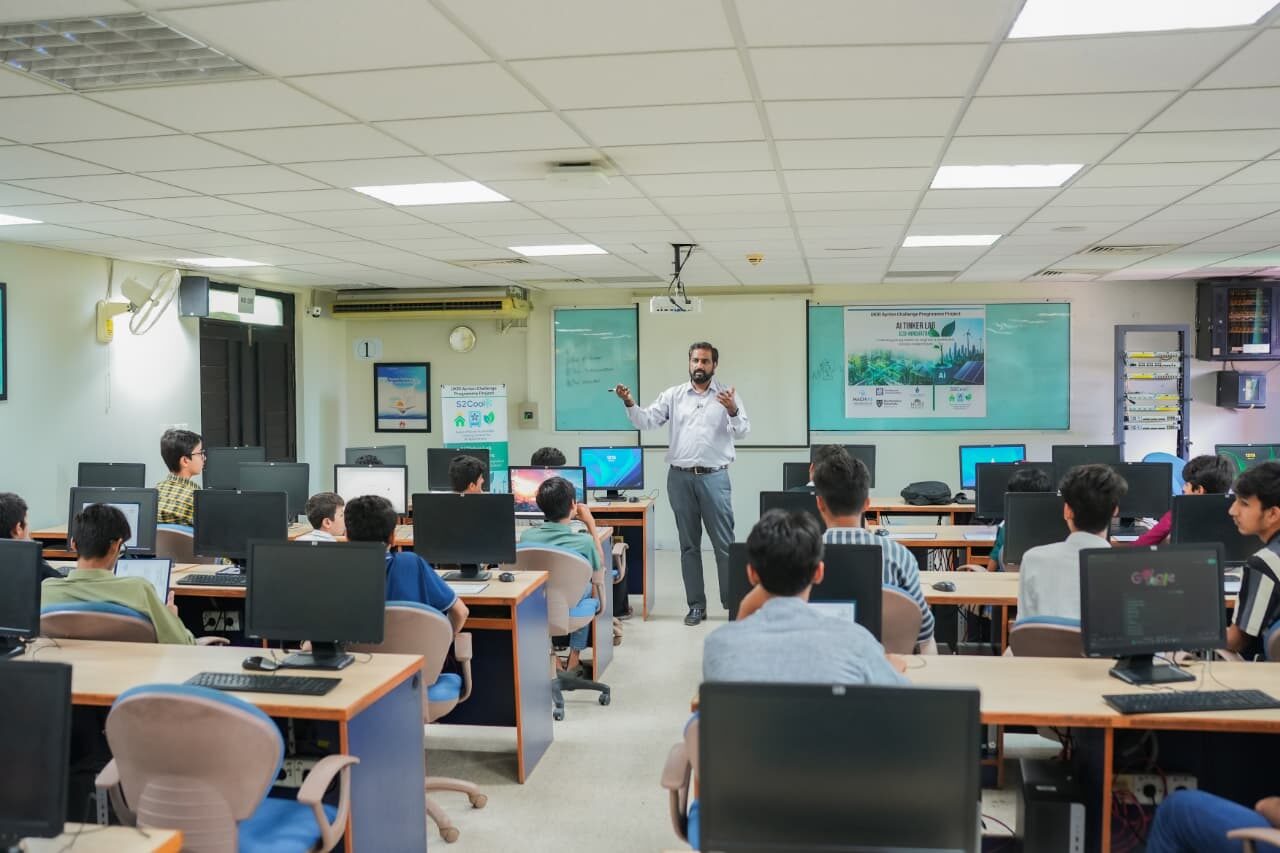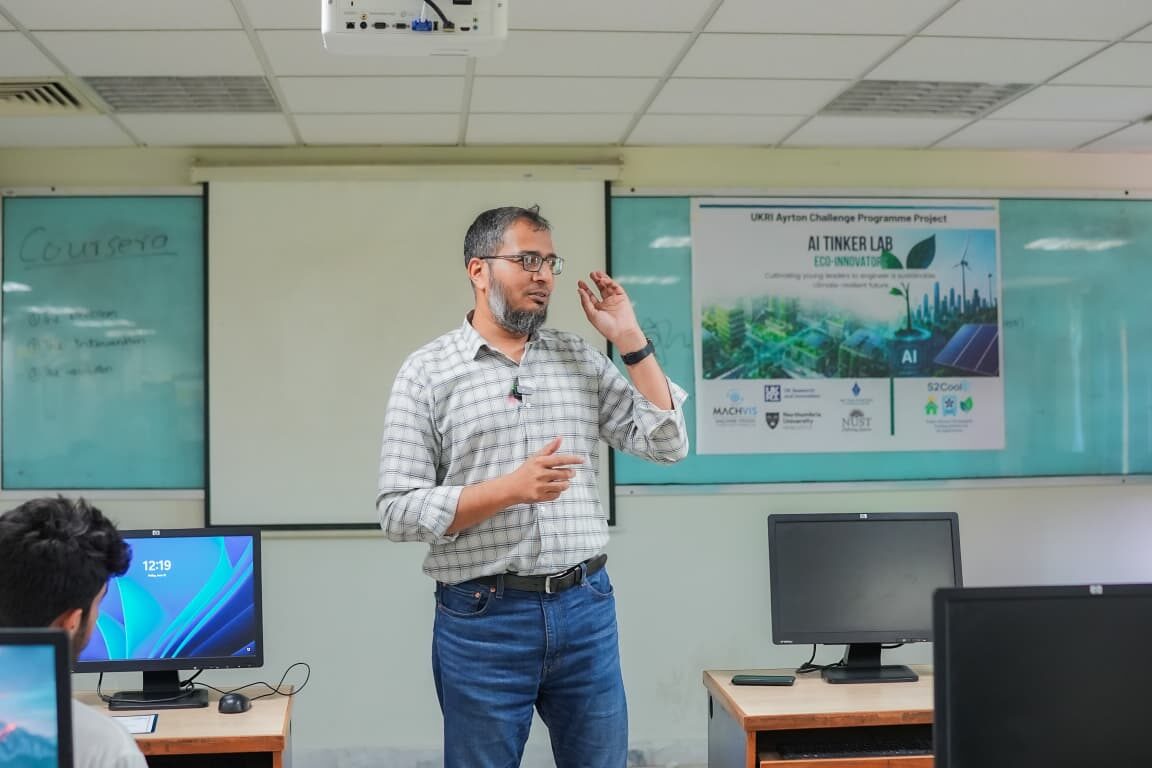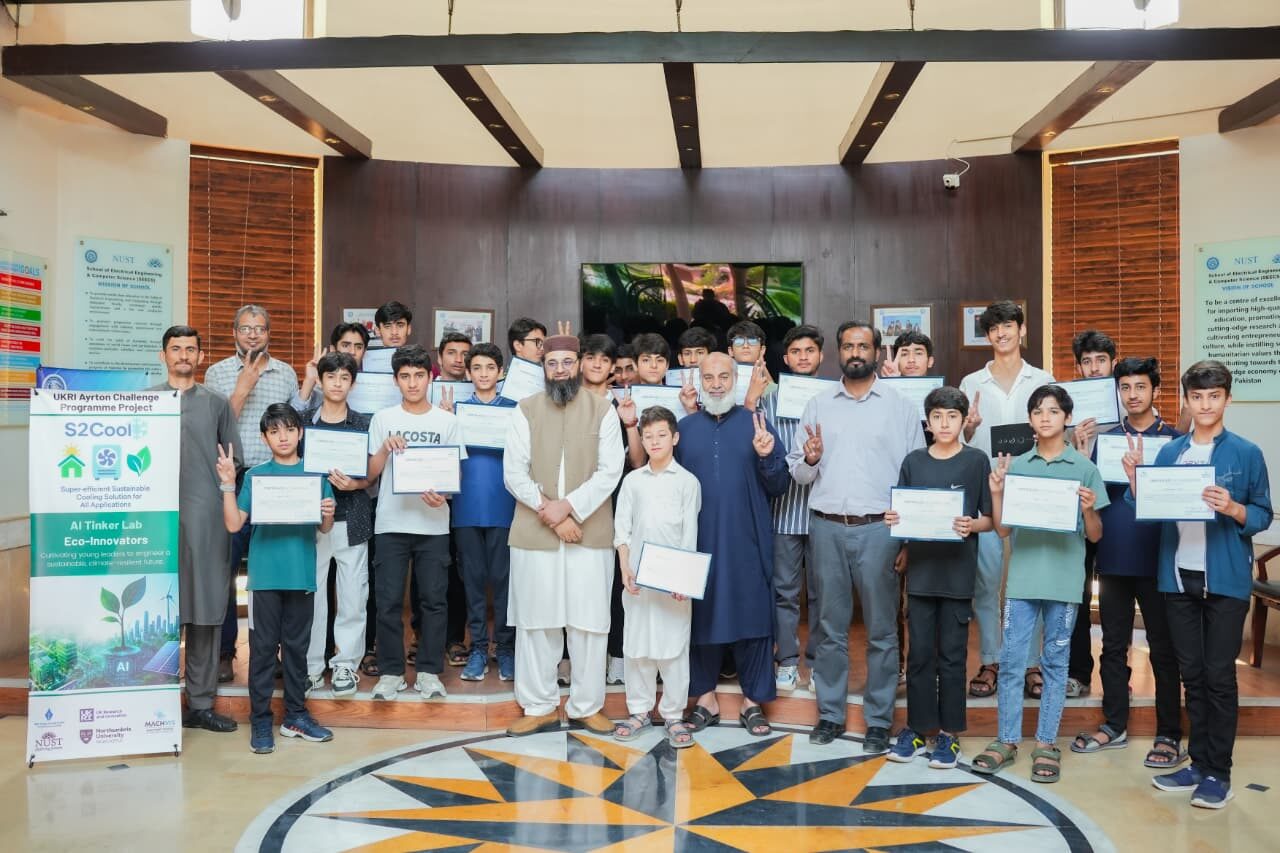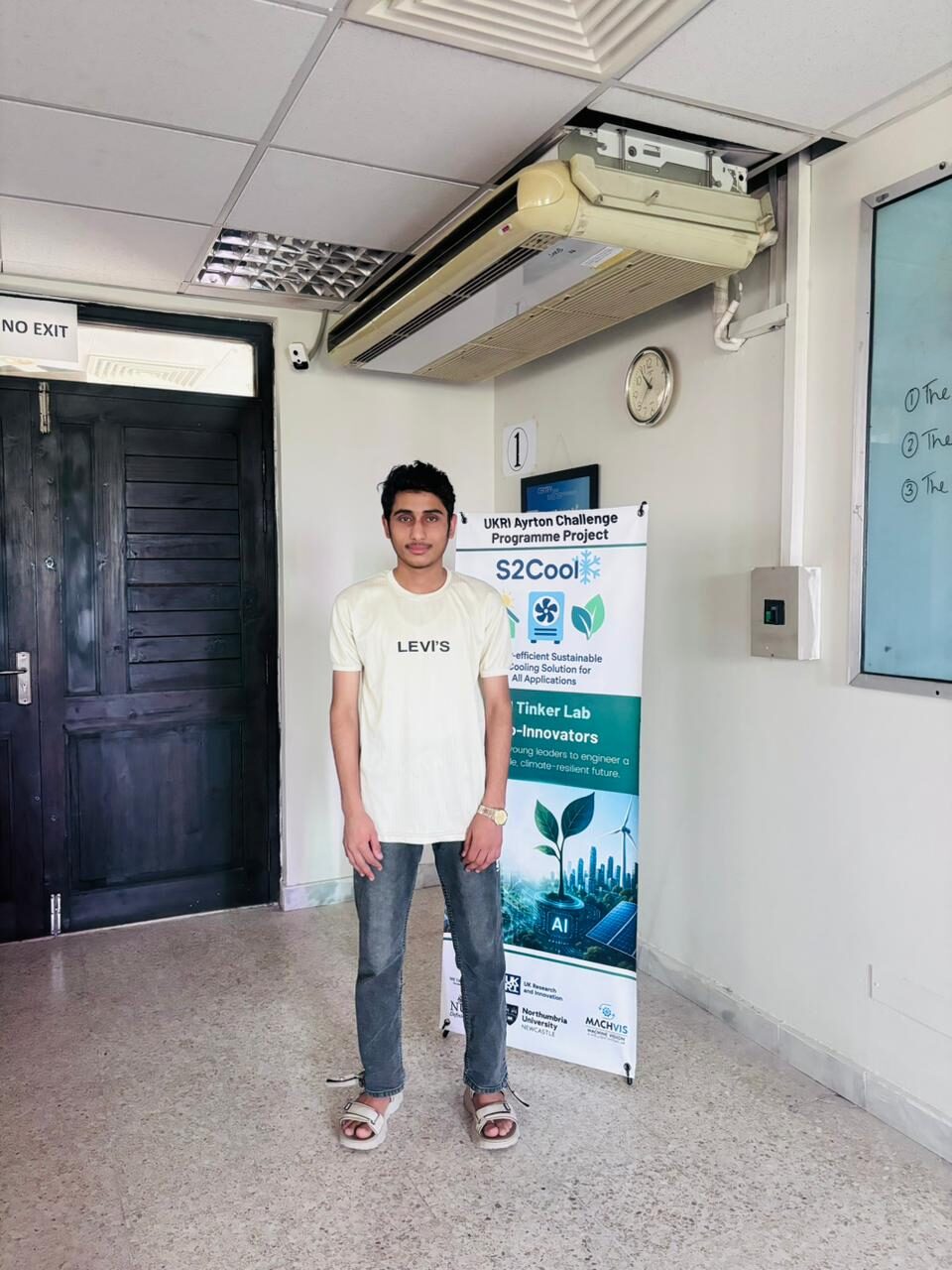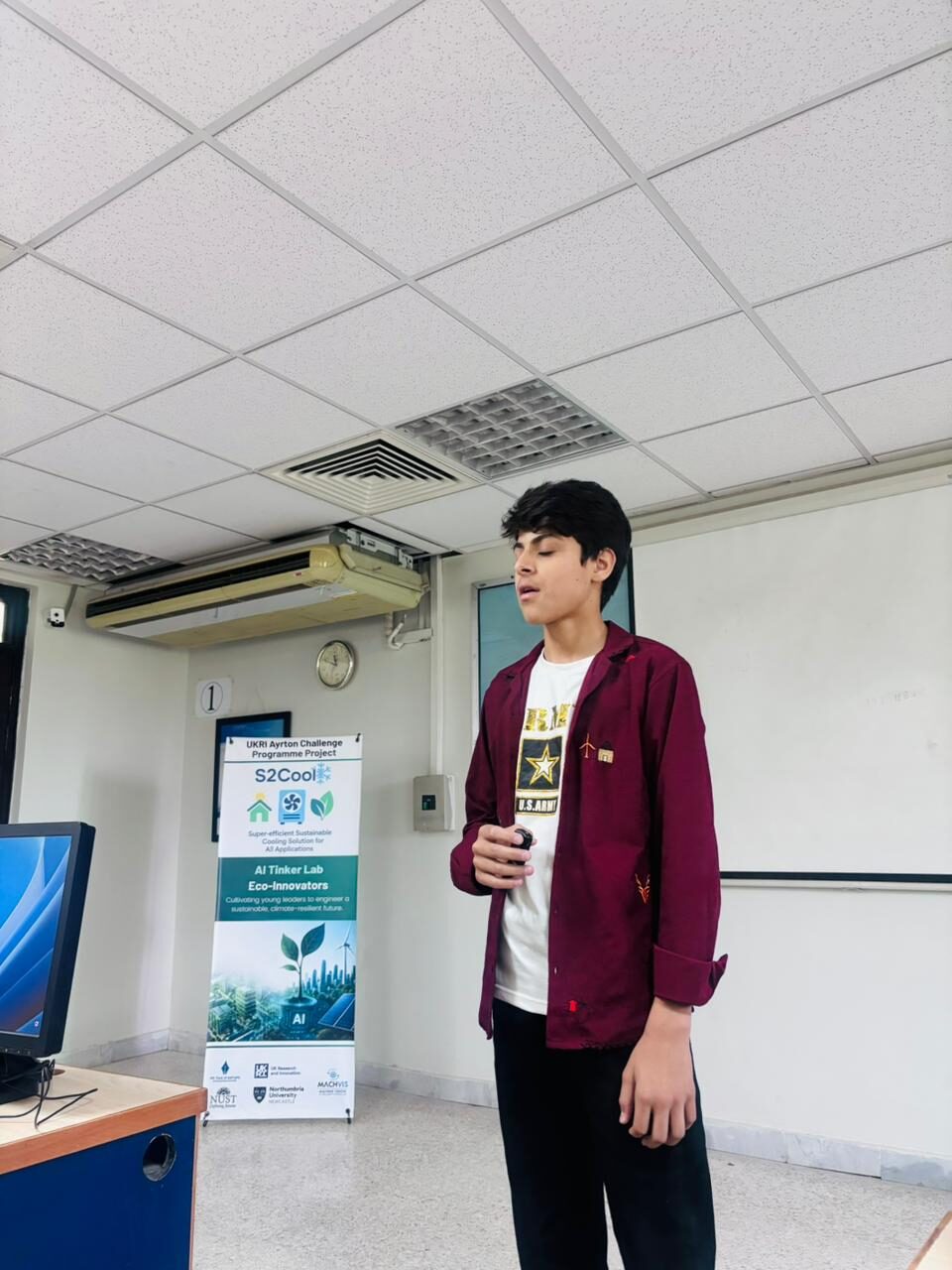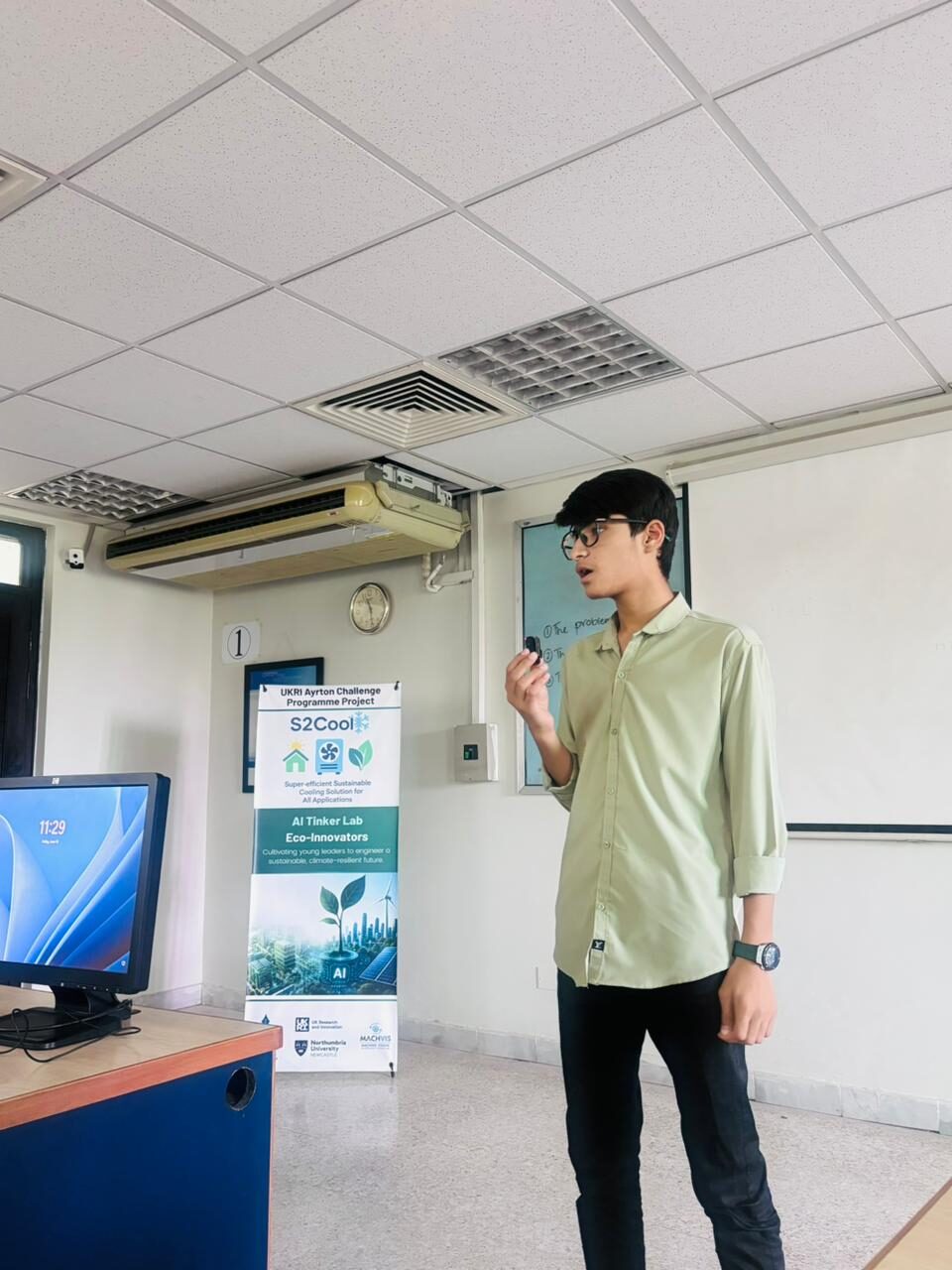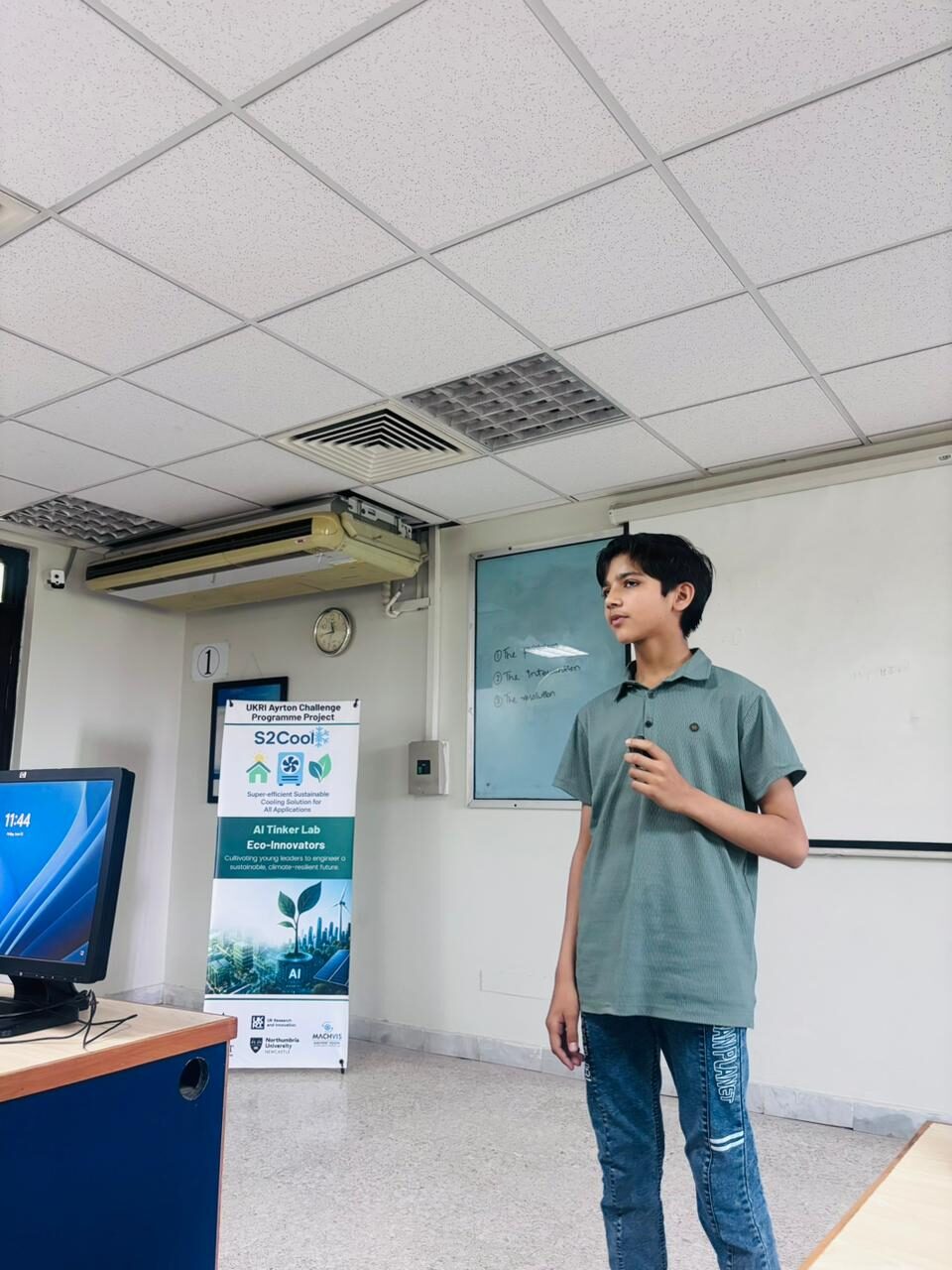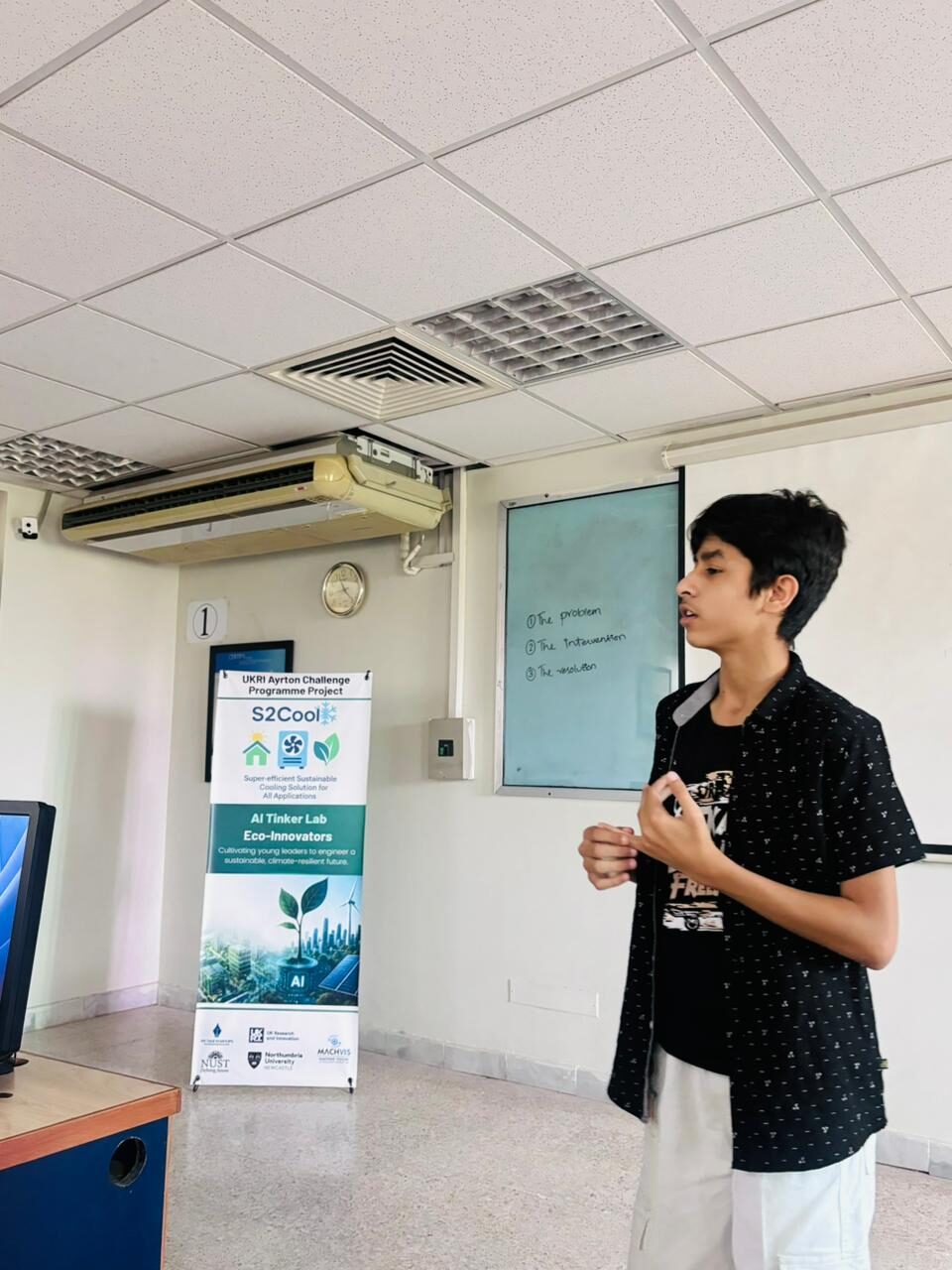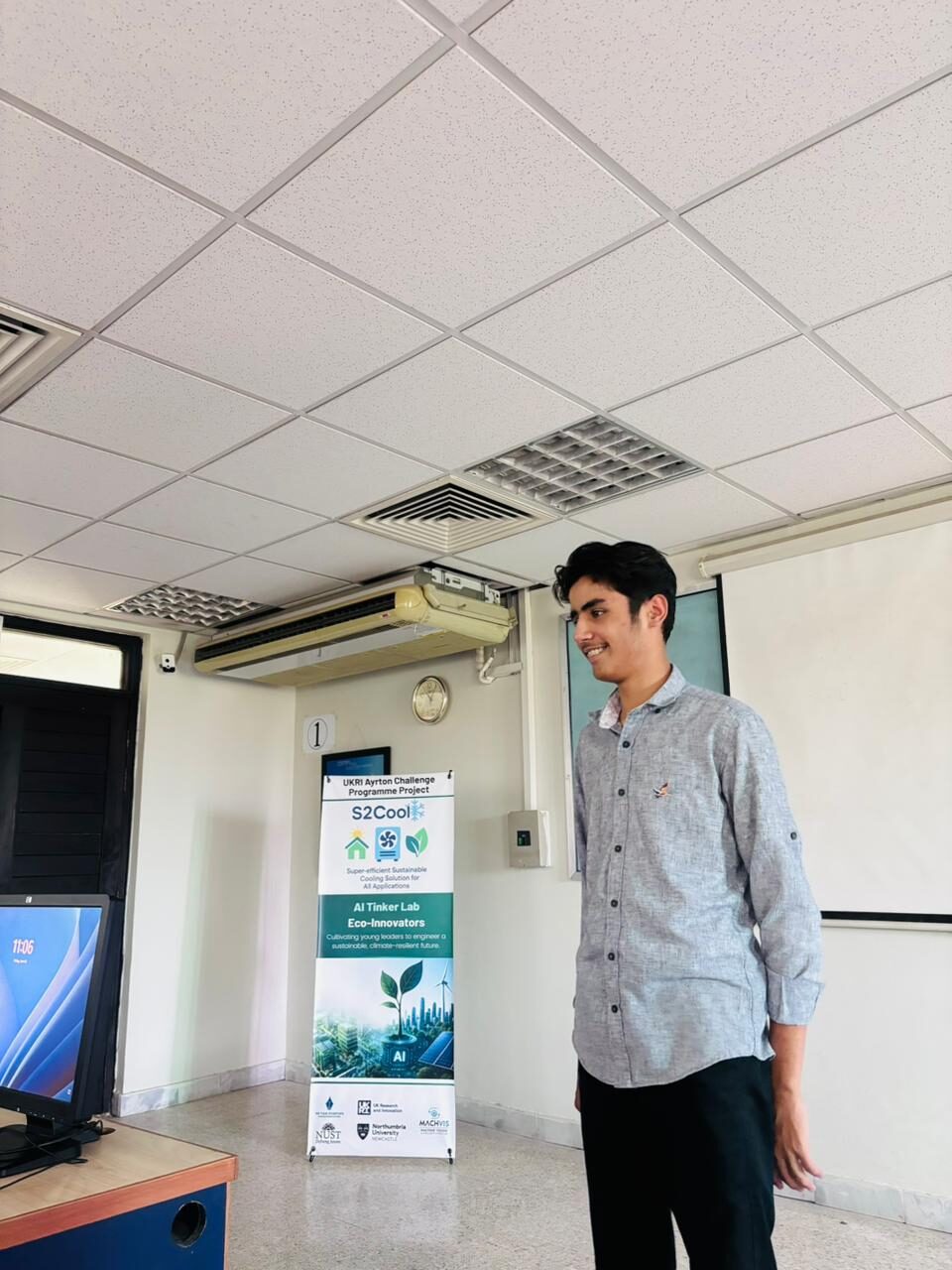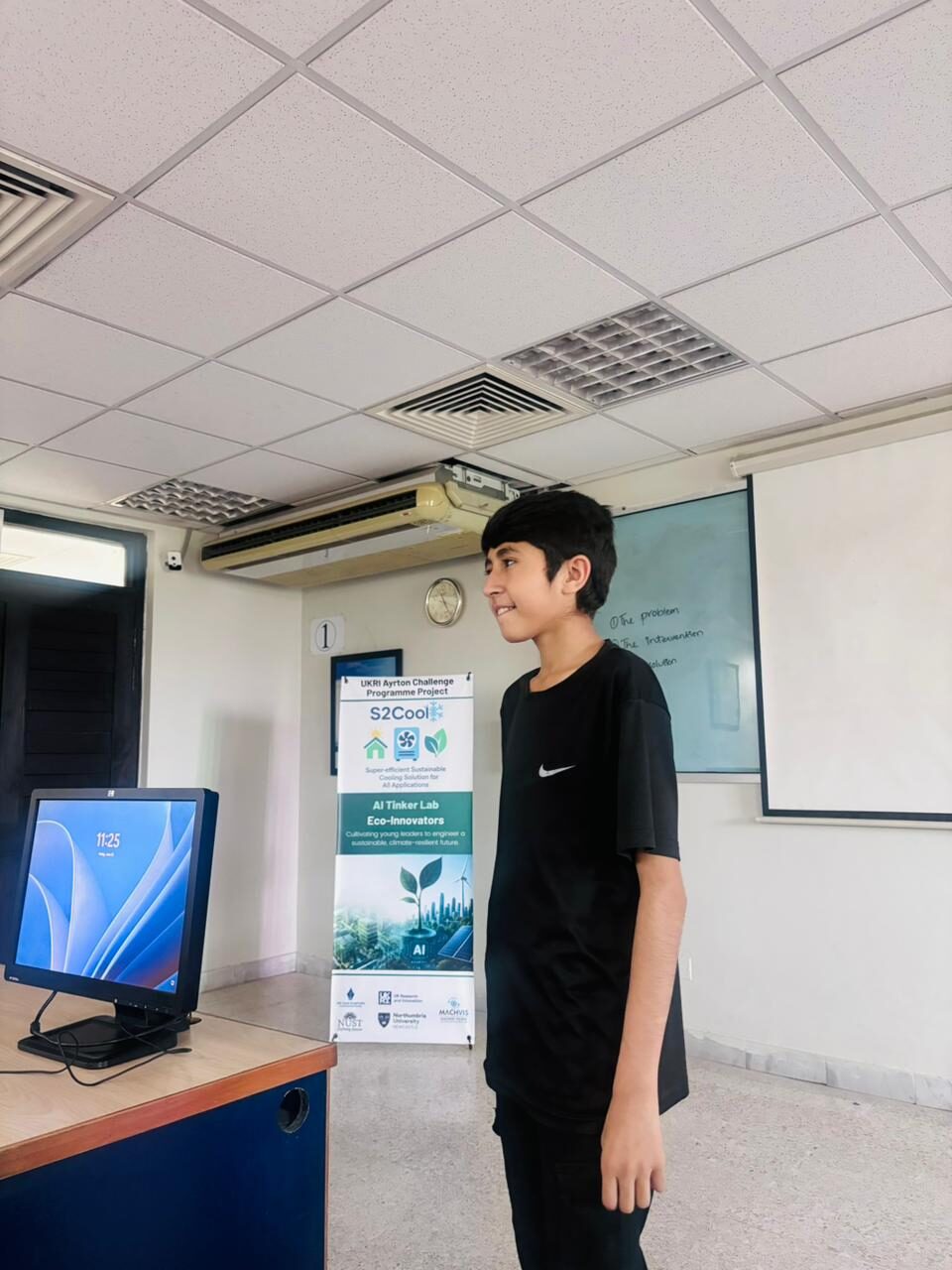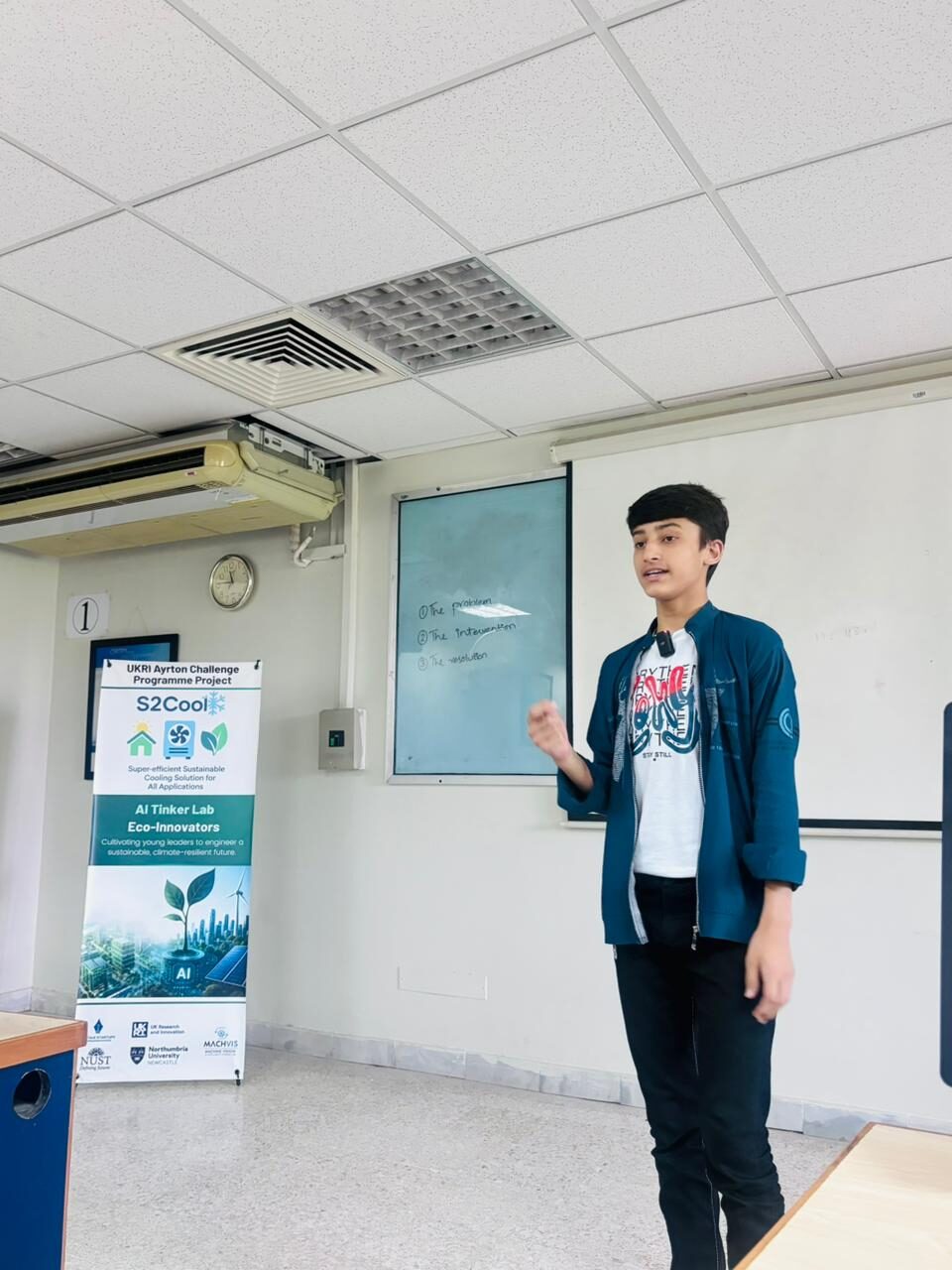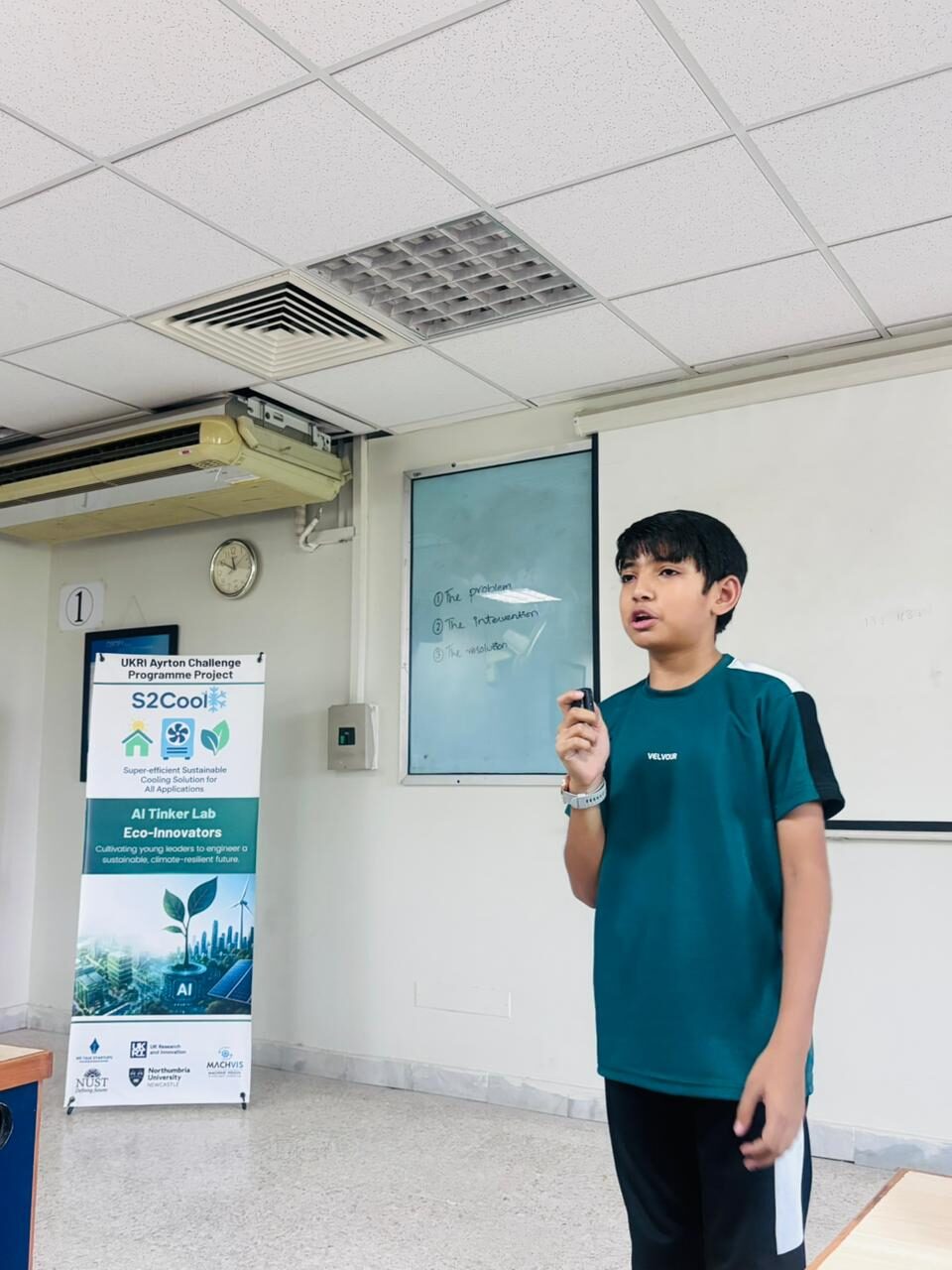
Cultivating young leaders to engineer a sustainable, climate-resilient future. A hands-on, 5-day interactive camp dedicated to inspiring the next generation to solve climate challenges using Artificial Intelligence, creativity, and green tech.
Camp Essentials
8 – 11 June, 2026 (Daily)
12 June: Capstone Day (10AM-4:30PM)
NUST SEECS, Islamabad
Sector H-12 Campus
Young Eco-Innovators
Climate Tech Enthusiasts
No prior coding/AI needed!
Just Curiosity & Passion
Empowering future leaders with the technical literacy and strategic insight to address major ecological and cooling issues globally.
Interactively train computer vision and classification models to solve real-world smart energy efficiency and waste management problems.
Inspect, test, and break AI datasets to discover biases and understand their ecological impact on physical management systems.
Design and deploy specialized AI personas programmed to deliver localized climate action directives and energy conservation tips.
Master prompt engineering techniques to synthesize high-impact generative art, comics, and stories on environmental sustainability.
Team up to brainstorm, formulate a Concept Canvas, and pitch your custom Green Tech solution at the physical exhibition.
Throughout the 5-day lab, you won't just learn theory; you will assemble a functional, collaborative tech prototype that builds sequentially day by day, culminating in a live exhibition presentation.
Establish energy saving systems and automatic waste sorters while observing how AI algorithms see waste and power usage.
Configure intelligent climate bots and prompt generative tools to illustrate and visualize climate challenges visually.
Define training datasets, draft functional wireframes on a Concept Canvas, and assemble a prototype to pitch to judges.
Explore our detailed, activity-driven itinerary. Switch between daily modules using the dynamic controller below.
A modern toolkit of software suite parameters and AI modeling frameworks kids will master during the camp.
Google image & visual recognition dataset structuring platform.
Natural Language processing system instruction engineering (LLMs).
Pixel synthesis, storyboards, and composition prompt styling.
Interactive planning boards to design data inputs and logic paths.
Test your eco-tech intuition with our quick interactive quiz. Find out how AI assists in sustainable cooling! Click an option to test your skills live.
What is the main advantage of using AI in "Smart Cooling" grids?
Learn from prominent scholars, researchers, and technical architects leading NUST computer vision projects.

Professor & Associate Dean
NUST SEECS

Assistant Professor
NUST SEECS

Faculty Member & Scholar
NUST SEECS

Faculty Member & Researcher
NUST SEECS
This initiative is funded by the UK Government through Project: APP47457, titled “Super-efficient Sustainable Cooling Solution for All Applications (S2Cool)” under the Ayrton Challenge Programme of the UK Research and Innovation (UKRI); however, the views expressed do not necessarily reflect the UK Government’s official policies.
The Project: APP47457 is led/implemented by Northumbria University UK along with collaborating global partners.



Get in touch with the project coordination team at NUST SEECS if you need administrative information or details on seat reservations.
SEECS NUST, Sector H-12, Islamabad, Pakistan