
The project “Super-efficient Sustainable Cooling Solution for All Applications (S2Cool)” is funded by the UK Government under the Ayrton Challenge Programme of the UK Research and Innovation (UKRI).
The Project is implemented/led by Prof. Dr Muhammad Wakil Shahzad from the Northumbria University UK together with 12 partners.













Why This Matters
Addressing the urgent challenge of extreme heat with sustainable innovation.
Pakistan is among the countries most exposed to extreme heat. Heatwaves in recent years have crossed dangerous thresholds, affecting human health, productivity, and livelihoods, especially in communities already facing energy poverty and unreliable electricity supply.
The S2Cool project responds to this by developing affordable, energy-efficient, and sustainable cooling solutions, designed for real-world deployment in Pakistan and other similar contexts.

Project Vision
To enable affordable, super-efficient, and sustainable cooling that addresses immediate needs in Pakistan while contributing long-term solutions for climate resilience.
Capacity Building
Creating a platform for sustainable cooling education. We aim to develop training resources, conduct workshops, and build local expertise.
Key Aim
To develop a novel, low-cost, and energy-efficient cooling solution alongside a broader capacity-building platform to support long-term adoption.
Technical Innovation
Beyond conventional cooling technologies.
S2Cool builds on the limitations of conventional cooling by developing a Novel Indirect Evaporative Cooling (NIEC) system intended to deliver improved efficiency and reduced operational cost.
The technology is designed to be relevant across multiple cooling contexts and applicable for different settings including residential, commercial, industrial, and even transport use cases.

Key Objectives
Our roadmap to sustainable cooling impact.
-
Design & Development
Develop and test a 20kW Novel Indirect Evaporative Cooler (NIEC) integrated with Mechanical Vapour Compression. -
AI Framework
Develop an AI-based framework for system optimisation and integration. -
GESI/EDI Evaluations
Ensure cooling benefits are equitable, particularly for vulnerable groups. -
Impact Assessment
Evaluate performance via life-cycle costing and sustainability metrics. -
Scale-up Strategy
Build a roadmap to scale solutions and support local deployment.
Project Structure
| WP | Title | Description | Lead |
|---|---|---|---|
| WP1 | Project Management | Overall coordination, reporting, and governance. | Nottingham (UNN) |
| WP2 | Weather Data & Analytics | Multi-site climate data collection and analysis to support design. | NUST (Pakistan) |
| WP3 | Digital Twin | Simulation-driven design and optimisation models. | Nottingham (UNN) |
| WP4 | AI/ML Framework | AI-based optimisation for forecasting and operational control. | Northumbria (UK) |
| WP5 | Prototype Fabrication | Fabrication and testing of 20 kW NIEC prototype. | BZU, Multan |
| WP6 | Scale-up | Techno-economic evaluation and commercialisation. | Nottingham (UNN) |
| WP7 | Impact Assessment | LCA, LCC, and GESI impact assessment. | Nottingham (UNN) |
| WP8 | Implementation | Deployment readiness and stakeholder alignment. | Nottingham (UNN) |
| WP9 | Dissemination | Public engagement and training programmes. | Nottingham (UNN) |
NUST Role: Work Package 2
NUST leads WP2: On-site Data Collection and Analysis for Efficient Cooler Design.
This focuses on collecting local weather and climate data from multiple locations in Pakistan, integrating it with historical databases, and extracting base parameters for system design and optimisation. WP2 also includes assessment of preferred cooling levels across population groups to ensure the design reflects real user needs.
Our Team

Prof. Dr. Muhammad Moazam Fraz
Principal Investigator (PI)
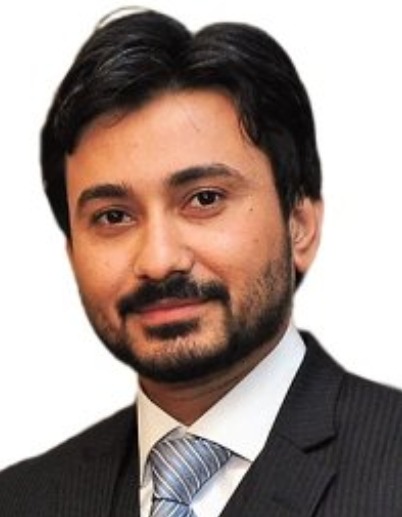
Dr. Muhammad Naseer Bajwa
Post Doctoral Fellow